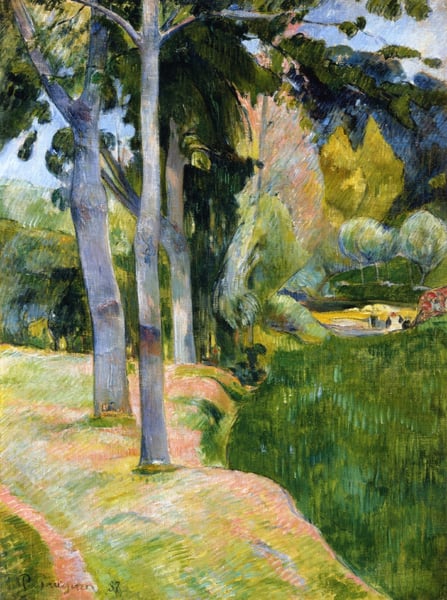
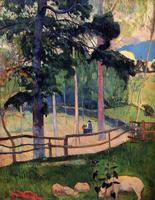
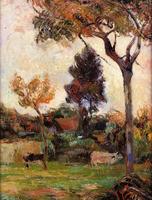
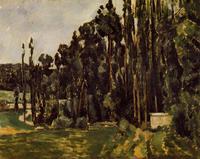
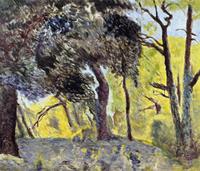
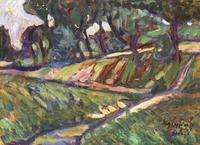
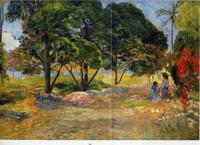
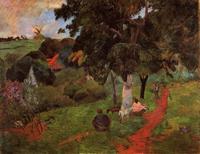
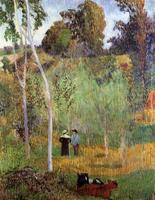
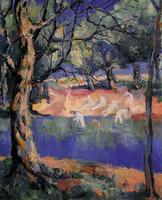
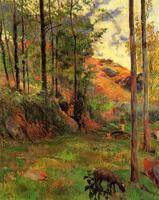
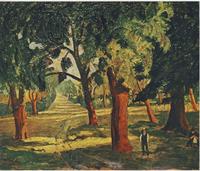
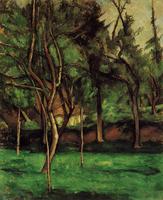
This landscape from Paul Gauguin’s Breton period exemplifies his shift toward Post‑Impressionist symbolism. The titular “large tree” becomes more than a natural element—it anchors the composition with bold, simplified forms and flattened space, rejecting the atmospheric perspective of Impressionism. Gauguin’s use of the tree as a central, almost architectonic motif reflects his growing interest in Synthetism, where shape and color convey emotional and spiritual meaning rather than direct observation. The work’s significance lies in how it distills the Breton countryside into a structured, symbolic pattern, foreshadowing the cloisonnist style that would define Gauguin’s later, more radical experiments in Tahiti.