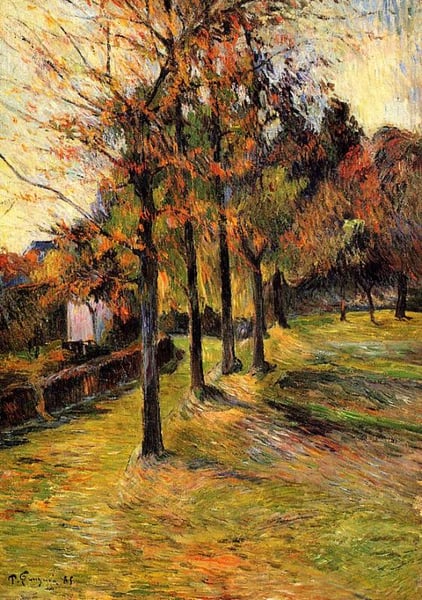
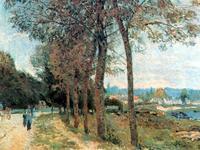
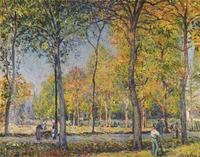
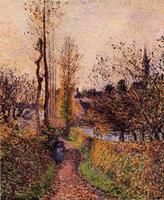
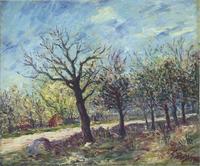
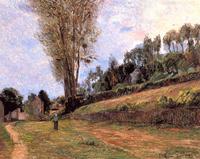
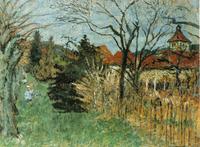
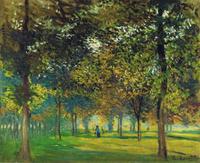
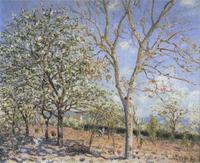
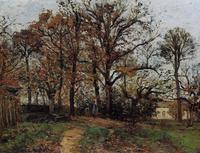
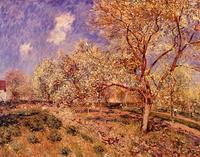
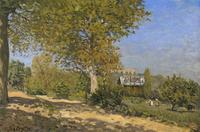
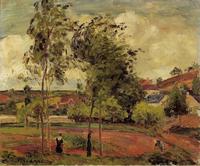
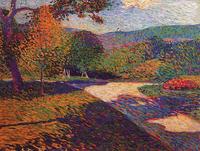
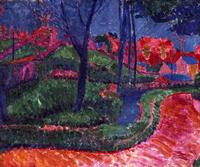
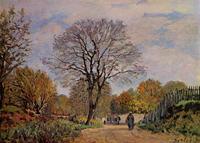
This early landscape by Paul Gauguin, titled Tree linen road, Rouen (likely a variant of "Tree-lined road, Rouen"), is a significant example of his formative period within the Impressionist style. As a work produced during the artist's early career, it demonstrates his engagement with the core tenets of Impressionism: the depiction of everyday rural or suburban scenes, an emphasis on natural light and atmosphere, and a loose, visibly textured brushwork that captures a fleeting moment. The genre—landscape—was central to Impressionism, and Gauguin's choice of a humble roadside view in Rouen reflects the movement's preference for modern life and ordinary settings over historical or mythological subjects.
What makes this artwork particularly notable within Gauguin's oeuvre is its role as a foundational stepping stone. It shows him working directly within the Impressionist idiom before his later shift toward Symbolism and Post-Impressionism, where he would abandon naturalistic color and perspective for more expressive, abstracted forms. Thus, Tree linen road, Rouen is significant as a document of Gauguin's early technical training and his initial immersion in a movement that would eventually inspire his radical departures. The painting captures a transitional moment—both in the artist's own development and in the broader history of late 19th-century art.