
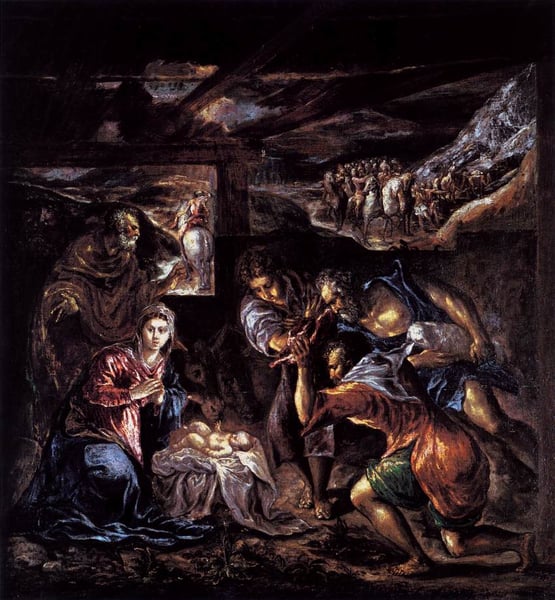
Análisis experto de Adoration of the Shepherds de El Greco
Estilo: Mannerism (Late Renaissance) · Género: religious painting
Expert Analysis: Adoration of the Shepherds by El Greco (Cretan Period)
This painting from El Greco’s Cretan period exemplifies a pivotal moment in his artistic development—a synthesis of the Byzantine iconographic tradition he mastered in his youth with the emerging Mannerist sensibilities of the Late Renaissance. The work is significant for its early demonstration of the stylistic hallmarks that would define El Greco’s mature career, even before his transformative journeys to Venice and Spain.
Technical and Stylistic Distinctiveness
- Byzantine Heritage: The composition retains the hieratic, front-facing arrangement of figures common in Cretan icons, with a central focal point on the Christ Child. The gold-toned backdrop and the solemn, elongated faces of the shepherds recall the spiritualized, non-naturalistic space of Eastern Orthodox icons.
- Mannerist Hallmarks: Despite its iconographic roots, the painting displays Mannerist tendencies—exaggerated proportions, contorted poses, and a deliberate rejection of classical balance. The shepherds’ limbs are slender, their gestures expressive rather than anatomically accurate, and the overall composition feels compressed, heightening emotional tension.
- Dramatic Color and Light: El Greco’s use of stark contrasts between luminous highlights and deep shadows (a precursor to his later tenebrism) creates a supernatural atmosphere. The infant Christ glows as a divine light source, drawing the viewer’s eye and emphasizing the theological miracle—a key Mannerist device to prioritize spiritual impact over naturalism.
Significance within the Cretan Period
This artwork is a bridge between El Greco’s early training as an icon painter and his future as a leading Mannerist. It is significant because it reveals his ability to infuse a traditional religious subject with the heightened emotion and stylized elongation that would later make his Spanish masterpieces so distinctive. The painting also prefigures his lifelong interest in unsettling spatial relationships and the expression of visionary ecstasy through distorted form—a radical departure from High Renaissance harmony.
Religious and Thematic Resonance
As a religious work, Adoration of the Shepherds focuses not on historical narrative but on the awe of the divine incarnation. The shepherds’ exaggerated awe and the tightly packed, almost claustrophobic space emphasize the intimate yet cosmic significance of the Nativity. This emotional intensity, rooted in both Byzantine solemnity and Mannerist drama, marks El Greco’s early contribution to the Counter-Reformation’s call for art that inspired fervent devotion.
In sum, this painting is a testament to El Greco’s innovative fusion of Eastern and Western traditions, establishing him as a uniquely visionary artist whose Mannerist style rejected naturalism in favor of a transcendent, spiritual reality.
Museum / Gallery
Visualmente similares
20 obras con composición y paleta relacionadas
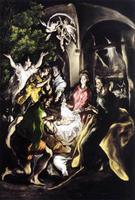
Adoration of the Shepherds
El Greco

Adoration of the Shepherds
Peter Paul Rubens

Adoration of the Shepherds
Peter Paul Rubens

Adoration of the Shepherds
Peter Paul Rubens
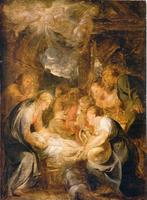
Adoration of the Shepherds
Peter Paul Rubens

Adoration of the Shepherds
Mattia Preti

Adoration of the Shepherds
Peter Paul Rubens
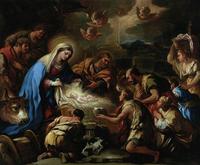
The Adoration of the Shepherds
Luca Giordano

The Adoration of the Shepherds
Gaspar de Crayer

The Adoration of the Shepherds
Anton Raphael Mengs
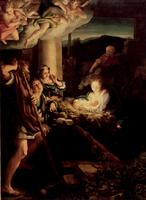
Adoration of the Shepherds (The Holy Night)
Correggio
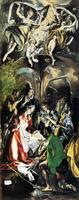
Adoration of the Shepherds
El Greco
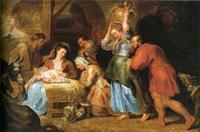
Adoration of the Shepherds
Peter Paul Rubens

Adoration of the Magi
Peter Paul Rubens

Adoration of the Shepherds
Bartolome Esteban Murillo
DIE ANBETUNG DER HIRTEN
Frans Wouters
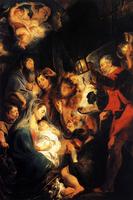
Adoration of the Shepherds
Jacob Jordaens
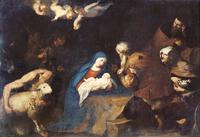
Adoration of the Shepherds
Jusepe de Ribera

Adoration des bergers
Thomas Blanchet
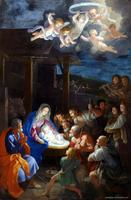
Adoration of the Shepherds
Guido Reni