
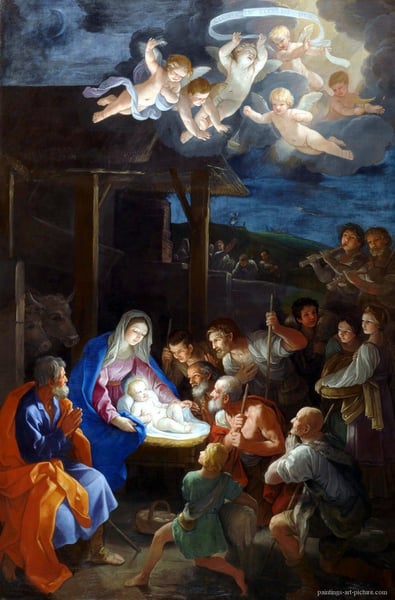
Expert analysis of Guido Reni’s Adoration of the Shepherds
Style: Baroque · Genre: religious painting
As an expert art historian, I will analyze "Adoration of the Shepherds" by Guido Reni based solely on the provided structured facts.
Artwork: Adoration of the Shepherds Artist: Guido Reni Style: Baroque Genre: Religious painting
Expert Analysis
Guido Reni’s Adoration of the Shepherds is a significant work within the Baroque style, yet it embodies a distinct, refined facet of the movement that sets it apart from the more dramatic, tenebrist treatments of the same subject by contemporaries like Caravaggio. The painting’s significance lies in how Reni reconciles the Baroque mandate for emotional immediacy and spiritual accessibility with a serene, idealized classicism.
Significance within the Baroque Style:
-
Devotional Clarity Over Dramatic Turmoil: While Baroque art often thrives on dynamic diagonal compositions and stark chiaroscuro, Reni employs a more balanced, pyramidal arrangement that gently directs the viewer’s gaze toward the infant Christ. This choice amplifies the core religious message—the humble adoration of the divine—without overwhelming the scene with theatrical chaos. The shepherds, traditionally rustic figures, are rendered with a graceful dignity, embodying a sense of awe that is both palpable and refined.
-
Luminous, Heavenly Tonality: The painting’s handling of light is key to its Baroque identity. Rather than the harsh, spotlit realism of Caravaggio, Reni bathes the scene in a soft, golden luminescence that emanates from the Christ child. This “divine light” unifies the figures and creates a tender, contemplative atmosphere. It is a hallmark of Reni’s “idealized” Baroque—a style that prioritizes beauty and grace as vehicles for spiritual revelation, aligning with the Counter-Reformation’s goal of inspiring piety through sublime vision.
-
Elegance and Emotional Restraint: Reni’s shepherds express wonder and devotion not through exaggerated gestures but through muted, lyrical poses and soft facial expressions. This restraint—born from his study of Raphael and the Bolognese School—makes the scene profoundly intimate and accessible. In the context of Baroque religious painting, this work demonstrates that emotional power need not come from violent movement or shadow; it can also emerge from serene harmony and the quiet, radiant moment of encounter.
Conclusion:
Guido Reni’s Adoration of the Shepherds is significant as a masterful synthesis of Baroque spirituality and classical idealism. It exemplifies the genre of religious painting by transforming a biblical narrative into a vision of celestial order and gentle humanity, proving that Baroque art’s emotional force can be as convincing in quiet adoration as in dramatic struggle.
Visually similar
20 works with related composition and palette

Adoration of the Shepherds
Guido Reni

Nativity
Philippe de Champaigne
The Adoration of the Shepherds
Anton Raphael Mengs

Adoration of the Shepherds
Mattia Preti
The Birth of Jesus
Cornelis de Vos

Adoration of the Shepherds
Bartolome Esteban Murillo

The Adoration of the Shepherds
Luca Giordano

Adoration of the shepherds
Gerard van Honthorst

The Adoration of the Shepherds
Anton Raphael Mengs
Adoration of the Shepherds
Peter Paul Rubens

Adoration of the Shepherds
Peter Paul Rubens

Adoration of the Shepherds
Bartolome Esteban Murillo

Adoration of the Magi
Charles-Andre van Loo (Carle van Loo)

The Adoration of the Shepherds
Sebastiano Conca

Nativity of Jesus
Josefa de Obidos

Nativity
Correggio

The Adoration of the Shepherds
Bartolome Esteban Murillo

Adoration of the Shepherds
Jusepe de Ribera
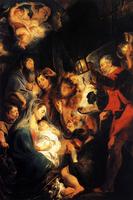
Adoration of the Shepherds
Jacob Jordaens
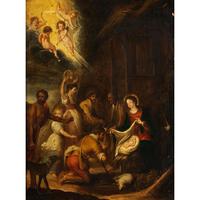
DIE ANBETUNG DER HIRTEN
Frans Wouters