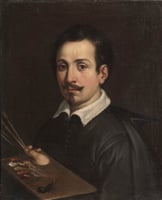
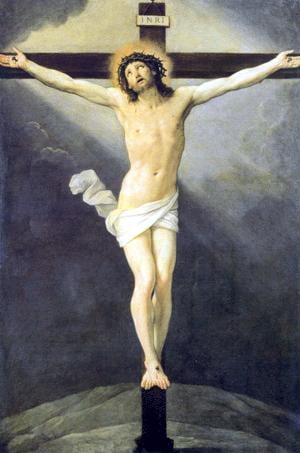
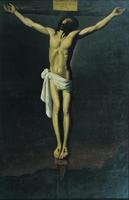
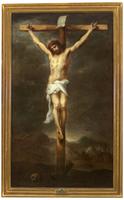
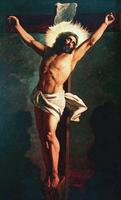
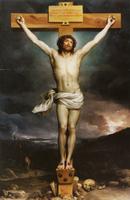
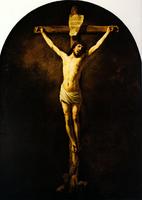
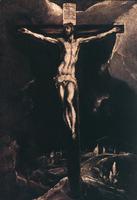
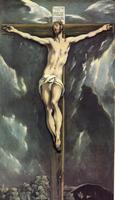
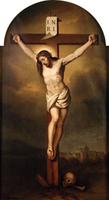
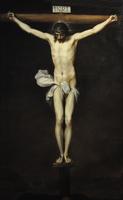
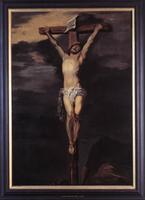
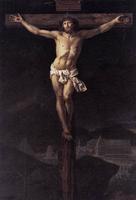
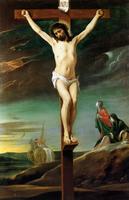
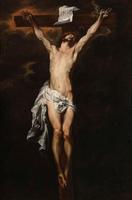
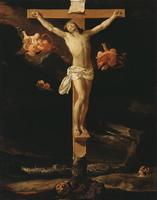
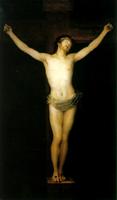
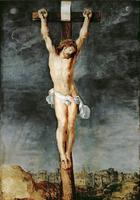
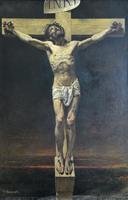
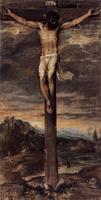
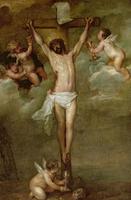
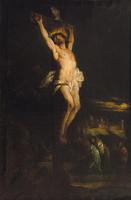
As a Baroque religious painting, Guido Reni’s Crucifixion exemplifies the era’s focus on spiritual drama and emotional immediacy. Within the Baroque style, Reni was known for a more classical, restrained approach—often softening the intense chiaroscuro and tenebrism typical of the period in favor of a luminous, idealized grace. This work’s significance lies in how it reconciles the Counter-Reformation’s demand for accessible, moving devotional imagery with the Baroque’s theatrical power. The subject of the Crucifixion, a central theme in religious painting, is handled with a refined sense of composition and a clear, serene pathos that invites contemplation rather than shock. Reni’s Crucifixion thus stands as a key example of the Baroque’s capacity to merge grand spiritual narrative with harmonious beauty, marking it as a notable achievement in 17th-century religious art.