1. Home
  2. Michelangelo
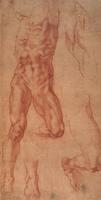
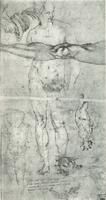
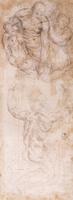
  3. Studies for "Pieta" or "The Last Judgement"
Studies for "Pieta" or "The Last Judgement"
Michelangelo
Michelangelo
1475 – 1564
Studies for "Pieta" or "The Last Judgement"

Studies for "Pieta" or "The Last Judgement"

Michelangelo·1530
Sign In

Details

Jahr1530
OrtRomeItaly
Größe28.2 × 39.8 cm
SerieSistine Chapel Paintings

Expertenanalyse zu Michelangelos Studies for "Pieta" or "The Last Judgement"

Stil: Mannerism (Late Renaissance) · Genre: sketch and study

KI-generiert

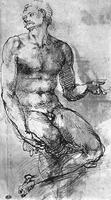
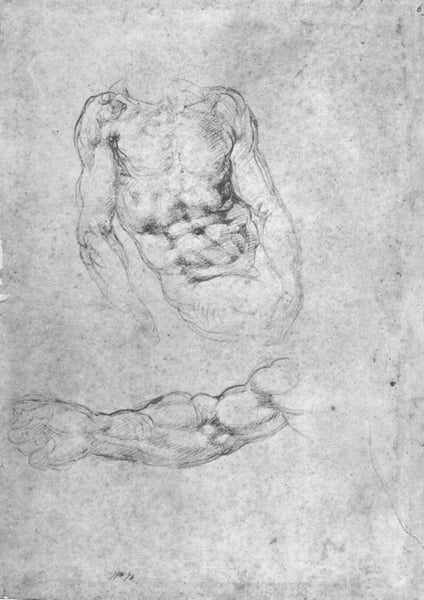
This artwork—a working sketch by Michelangelo for either a Pietà or The Last Judgement—is significant as a rare window into the master’s creative process during the transition from the High Renaissance to Mannerism.

Mannerist experimentation in form
Michelangelo’s studies reveal the hallmark of Mannerism: a deliberate departure from the balanced, harmonious proportions of the High Renaissance. Here, figures are contorted, elongated, and arranged in complex, spiraling poses (figura serpentinata). The sketch captures him testing these extremes of anatomy and emotion, pushing the boundaries of naturalism into a more expressive, intellectualized space.

The study as a genre of artistic authority
As a sketch and study, this work underscores Michelangelo’s revolutionary approach to design (disegno). For Mannerist artists, the preparatory drawing was not merely a tool but a statement of creative imagination. This sheet shows the raw, unfinished energy of his hand—quick lines that prioritize dynamic tension over polished finish. It documents his process of working out multiple compositional ideas for two of his most iconic religious subjects, suggesting a fluid exchange between themes of mourning (Pietà) and divine judgment (Last Judgement).

Historical significance within Mannerism
This study exemplifies how Michelangelo, even in his later years, influenced the Mannerist generation. His preference for exaggerated musculature, dramatic foreshortening, and crowded, unstable compositions directly shaped artists like Pontormo and Rosso Fiorentino. In this sketch, we see the seeds of Mannerism’s hallmark anxiety and virtuosity—a departure from Raphael’s calm order toward a more personal, tormented vision of the divine.

Museum / Gallery

Casa Buonarroti, Florence, Italy

Genre

Sketch and study

Stil

Mannerism (late renaissance)

Tags

Male-nude sketch figure drawing head

Visuell ähnlich

20 Werke mit ähnlicher Komposition und Farbpalette

Study for Haman

Study for Haman

Michelangelo

The Study of Adam

The Study of Adam

Michelangelo

Figure studies of a male youth

Figure studies of a male youth

John Singer Sargent

Study of a body of Christ

Study of a body of Christ

Albrecht Durer

Study of nude man

Study of nude man

Michelangelo

Mario Mancini

Mario Mancini

John Singer Sargent

Study of a nude youth

Study of a nude youth

Georgios Jakobides

Study to The Libyan Sibyl

Study to The Libyan Sibyl

Michelangelo

Various studies

Various studies

Michelangelo

Study for the Baptism of the People

Study for the Baptism of the People

Andrea del Sarto

Study for Christ

Study for Christ

Luc-Olivier Merson

Study for Adam

Study for Adam

Raphael

Study to "Moses Receiving the Tablets of Law"

Study to "Moses Receiving the Tablets of Law"

Jacopo Pontormo

Study of a seated male nude

Study of a seated male nude

Umberto Veruda

Kneeling Male Nude With Sprawled Out Arms, Male Torso

Kneeling Male Nude With Sprawled Out Arms, Male Torso

Gustav Klimt

Nude Study

Nude Study

Annibale Carracci

Standing Male Nude Seen from the Front

Standing Male Nude Seen from the Front

Vincent van Gogh

Male nude and arm of bearded man

Male nude and arm of bearded man

Michelangelo

The Study of Adam

The Study of Adam

Michelangelo

Study to "Pieta"

Study to "Pieta"

Michelangelo

caleido

Version 1.0.368

Discord beitretenomelasÜber unsStädteDatenschutzerklärungNutzungsbedingungenDatenlöschungHilfe
© 2026 Caleido