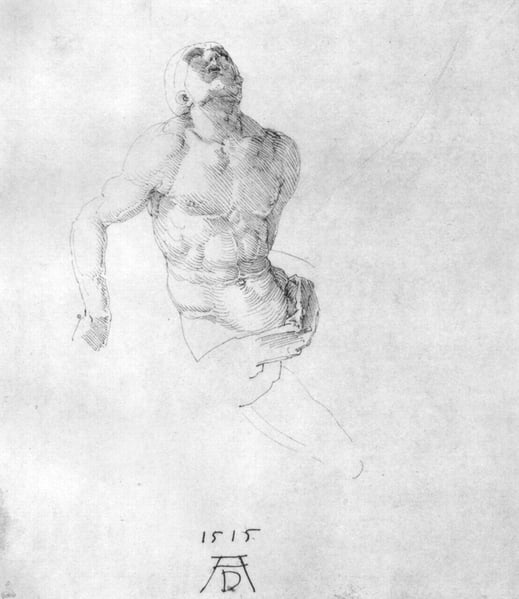
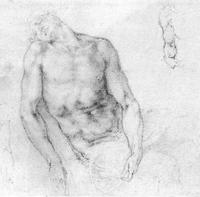
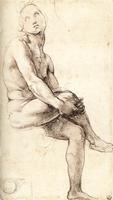
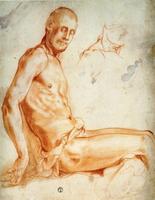
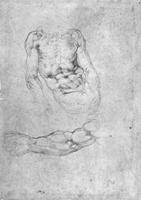
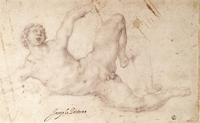
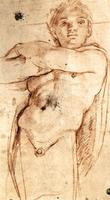
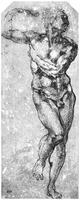
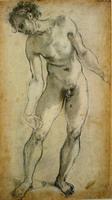
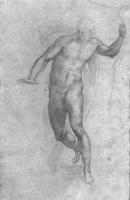
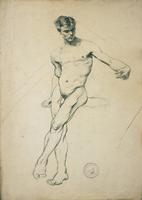
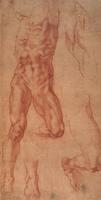
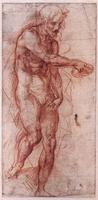
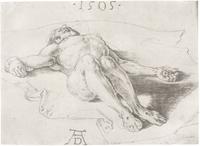
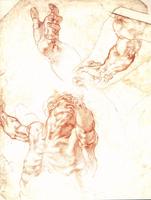
Albrecht Dürer’s Study of a body of Christ is a quintessential example of the Northern Renaissance’s fusion of meticulous observation with deep religious sentiment. As a sketch and study, it reveals Dürer’s rigorous preparatory process—a hallmark of his method—where he dissected human anatomy to achieve a lifelike, expressive rendering of the crucified Christ. The work’s significance lies in its demonstration of how Northern Renaissance artists like Dürer married the empirical accuracy of Flemish detail with the classical proportions newly imported from Italy, all while maintaining a devotional intensity. This study is not merely a technical exercise; it is a theological meditation on suffering, captured through the precise musculature and poignant posture of the figure, reflecting the era’s growing interest in naturalism as a vehicle for spiritual truth.