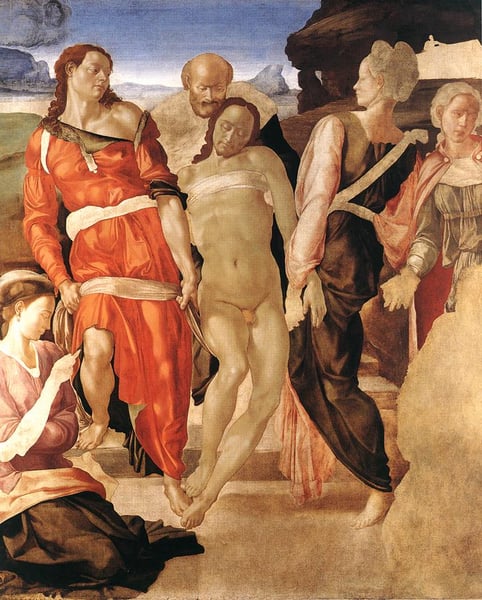
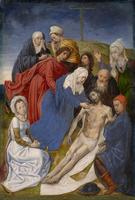
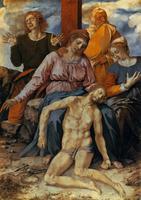
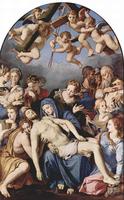
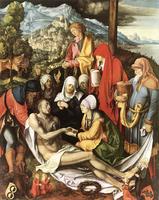
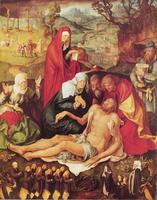
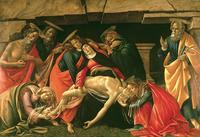
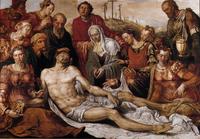
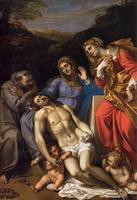
As a masterpiece of the High Renaissance, Michelangelo’s The Entombment exemplifies the period’s revolutionary approach to religious painting. The work is significant for how it synthesizes classical ideals of balance and harmony (hallmarks of the High Renaissance style) with profound emotional depth, elevating the biblical narrative of Christ’s burial into a timeless meditation on grief, sacrifice, and humanity. The composition—though only implied by the style—would have presented figures in a carefully structured, pyramidal arrangement, a typical High Renaissance device that creates stability while drawing the viewer’s eye to the central act of the entombment. Michelangelo’s treatment of the religious subject matter also demonstrates the era’s shift from iconic, otherworldly representations toward a more naturalistic, psychologically resonant depiction of sacred events. This fusion of formal perfection (the balanced, idealized bodies of the High Renaissance) with deeply felt human emotion (the somber, intimate nature of the religious scene) marks The Entombment as a pivotal work that transcends mere illustration, offering a profound visual theology that remains central to its significance in art history.