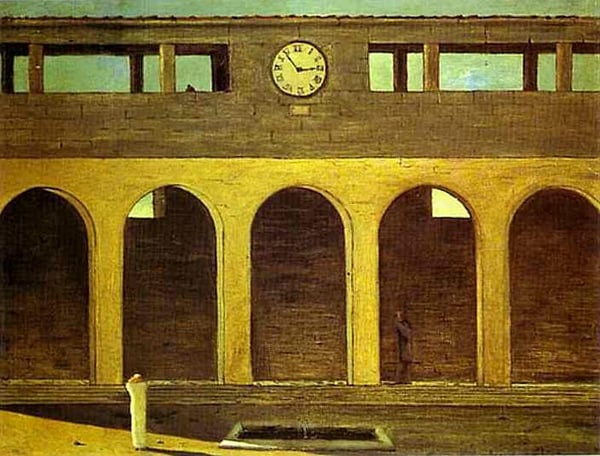
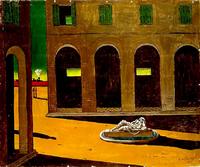
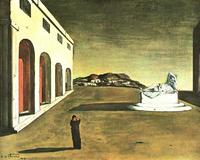
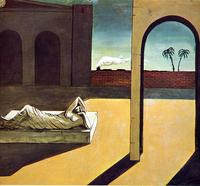
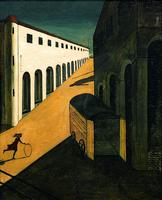
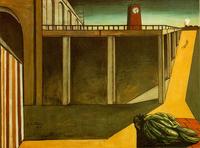
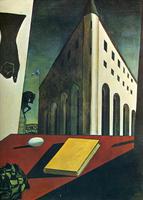
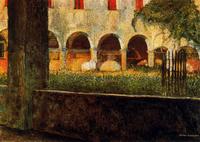
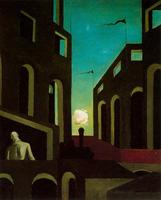
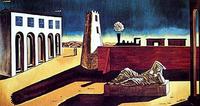
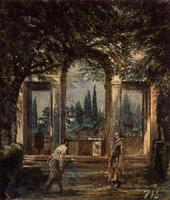
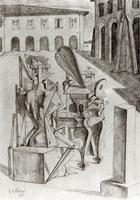
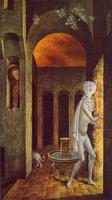
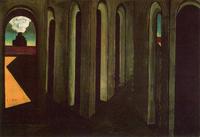
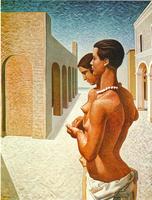
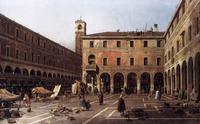
“The Enigma of the Hour” by Giorgio de Chirico is a quintessential example of Metaphysical art, a movement he pioneered. As a cityscape, the work transforms an ordinary urban scene into a stage for psychological and philosophical unease. Its significance lies in how it embodies the core principles of Metaphysical painting: the creation of an enigmatic, dreamlike atmosphere through distorted perspective, strong chiaroscuro, and the juxtaposition of classical architecture with unsettling emptiness. The painting’s title itself invites contemplation—the “hour” becomes a riddle, suspending time and space in a way that questions reality. Within the Metaphysical style, de Chirico’s cityscapes like this one established a visual language of mystery and disorientation that directly influenced later Surrealist art.