
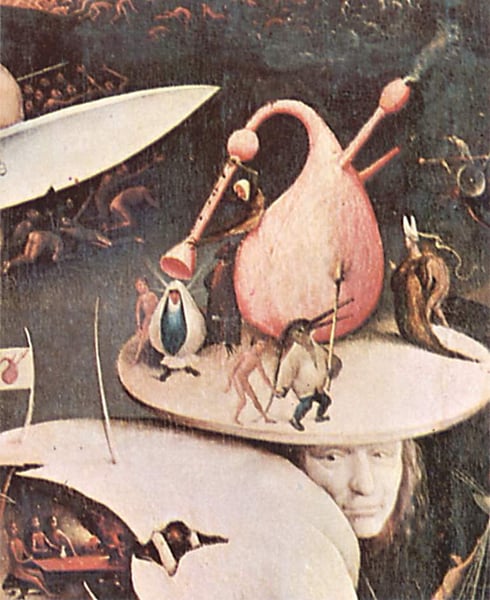
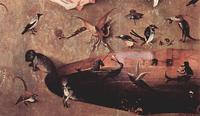
The Garden of Earthly Delights (detail)
Dettagli
Analisi esperta di The Garden of Earthly Delights (detail) di Hieronymus Bosch
Stile: Northern Renaissance · Genere: religious painting
Expert Analysis: Hieronymus Bosch’s The Garden of Earthly Delights (detail)
As a masterpiece of the Northern Renaissance, this detail from Bosch’s iconic triptych is a profound example of religious painting that transcends mere devotional imagery. Painted around 1490–1510, the work is celebrated for its surreal, almost dreamlike symbolism, which was revolutionary for its time.
Significance within the Northern Renaissance:
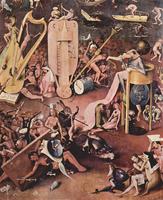
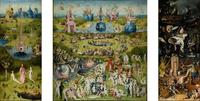
Bosch broke from the period’s typical naturalism and serene religious scenes. Instead, he infused his work with grotesque hybrid creatures, esoteric allegories, and lush, unsettling landscapes. This detail likely captures a fragment of the central panel, “The Garden of Earthly Delights,” which depicts humanity’s descent into sinful pleasure before the hellish consequences shown in the right panel.
Religious and Moral Weight:
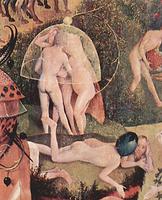
Despite the fantastical imagery, the painting is deeply moralizing. Bosch used vivid, grotesque details—such as monstrous birds, bizarre fruits, and ambiguous couples—to illustrate the follies of lust, gluttony, and pride. Each element is a visual sermon on the fleeting nature of worldly pleasure and the inevitability of divine judgment.
What Makes This Detail Stand Out:
- Inventive Iconography: Bosch invented a visual language of sin that feels both medieval and modern. The detail’s strange, oversized fruits and naked figures symbolize temptation and corruption in a way no other Northern Renaissance artist attempted.
- Technical Precision: Despite the fantastical subject, Bosch rendered every tiny figure, plant, and creature with remarkable detail and vibrant color, typical of Flemish panel painting.
- Psychological Depth: The expressionless, dreamlike faces of the figures create a haunting ambiguity—are they blissful or trapped? This ambiguity forces viewers to confront their own moral choices.
Legacy:
This detail epitomizes why Bosch remains one of the most innovative artists of the Northern Renaissance. His work prefigures Surrealism by centuries and challenges the boundary between religious instruction and bizarre imagination. The Garden of Earthly Delights remains a cultural touchstone for its unparalleled fusion of devotional intent, social critique, and pure visual fantasy.
Visivamente simili
20 opere con composizione e palette affini
The Garden of Earthly Delights (detail)
Hieronymus Bosch
The Garden of Earthly Delights (detail)
Hieronymus Bosch

The Garden of Earthly Delights (detail)
Hieronymus Bosch

The Garden of Earthly Delights (detail)
Hieronymus Bosch
The Last Judgement (detail)
Hieronymus Bosch
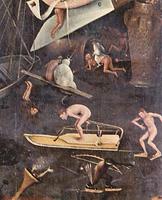
The Garden of Earthly Delights (detail)
Hieronymus Bosch

The Garden of Earthly Delights (detail)
Hieronymus Bosch
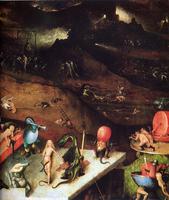
The Last Judgement (detail)
Hieronymus Bosch
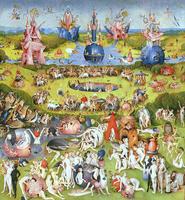
The Garden of Earthly Delights (detail)
Hieronymus Bosch
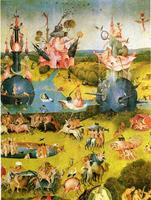
The Garden of Earthly Delights (detail)
Hieronymus Bosch
The Garden of Earthly Delights (detail)
Hieronymus Bosch
The Garden of Earthly Delights (detail)
Hieronymus Bosch

The Garden of Earthly Delights (detail)
Hieronymus Bosch

The Haywain Triptych (detail)
Hieronymus Bosch

Temptation of St. Anthony (detail)
Hieronymus Bosch
The Temptation of St. Anthony (detail)
Hieronymus Bosch
Temptation of St. Anthony (detail)
Hieronymus Bosch
The Last Judgement (detail)
Hieronymus Bosch
The Garden of Earthly Delights
Hieronymus Bosch
The Garden of Earthly Delights (detail)
Hieronymus Bosch