Analisi esperta di Staircase 19 di Fernand Leger
Stile: Cubism · Genere: cityscape
Artwork Analysis: "Staircase 19" by Fernand Léger
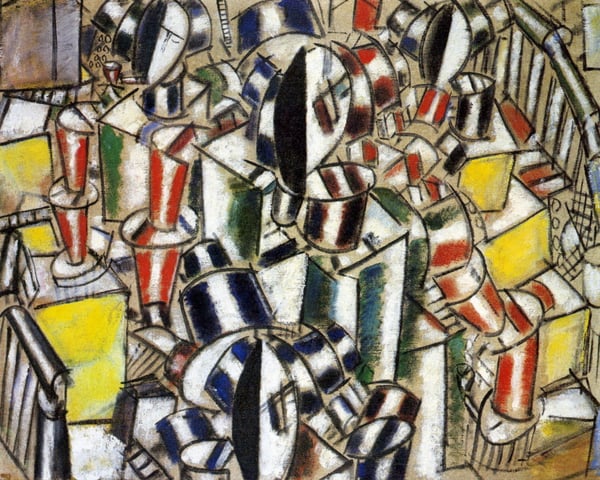
As an urban Cubist cityscape, Fernand Léger's "Staircase 19" stands as a pivotal example of how the artist transformed the analytical language of Cubism into a celebration of modern, mechanized life. While traditional Cubism (practiced by Picasso and Braque) often deconstructed still lifes and figures into muted, faceted planes, Léger injected the movement with vibrant color, cylindrical forms, and a rhythmic dynamism that echoed the energy of contemporary cities.
The painting’s significance lies in its embodiment of Léger’s signature “tubism”—a style that reimagined the urban environment through bold, pipe-like shapes and industrial geometry. The staircase, a common transitional space in cityscapes, becomes a vertical, layered structure of interlocking arcs, cylinders, and sharp angles. Léger does not aim to replicate a specific staircase but rather to dissect its essence: the movement of bodies, the play of light on banisters, and the friction between solid architecture and transient human presence. This approach bridges Cubism’s fragmentation with the optimism of the Machine Age, making the work a landmark of early 20th-century modernism.
Within the Cubist canon, "Staircase 19" is notable for its rejection of monochromatic austerity. Instead, Léger employs contrasts of primary colors against grays and blacks, creating a visual rhythm that mimics the pulse of city life. The composition pushes the viewer’s eye upward and diagonally, suggesting ascent, progress, and the perpetual motion of the modern metropolis. By centering the work on an everyday architectural element—a staircase—Léger elevates the mundane to the monumental, demonstrating how Cubism could capture not just form, but the very experience of urban space.
Ultimately, "Staircase 19" is significant because it expands Cubist vocabulary beyond still life and portraiture, applying its principles to the dynamic cityscape. It prefigures Léger’s later, more abstract works while remaining deeply rooted in the visual language of early Cubism, making it a key transitional piece in the evolution of modern art.
Visivamente simili
20 opere con composizione e palette affini
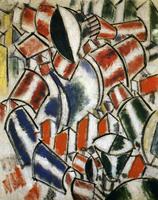
The Sitted Woman
Fernand Leger
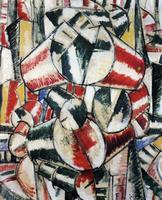
Contrast of form
Fernand Leger
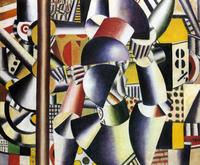
Acrobats in the circus
Fernand Leger
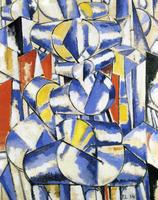
Contrast of forms
Fernand Leger
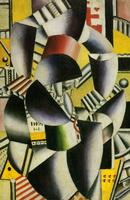
Man and Woman
Fernand Leger
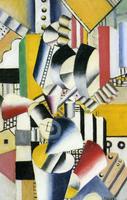
Contrast of Forms
Fernand Leger
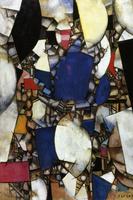
The Woman in Blue
Fernand Leger
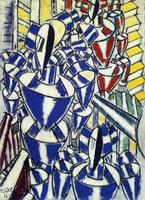
The Exit of the Russian Ballet
Fernand Leger
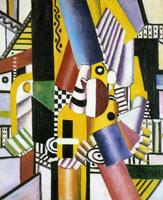
The Stove
Fernand Leger
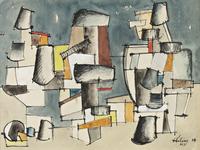
Untitled
Jean Helion
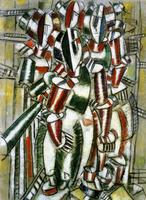
The Balcony
Fernand Leger
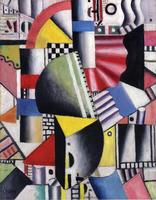
Factories
Fernand Leger
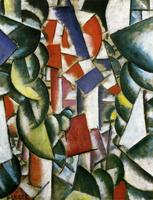
The House under the trees
Fernand Leger
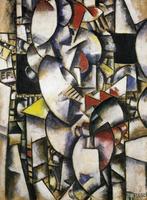
Naked model in the workshop
Fernand Leger
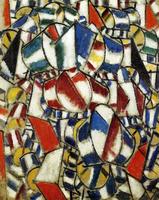
Contrast of Forms
Fernand Leger
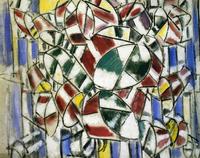
Geometric standards
Fernand Leger
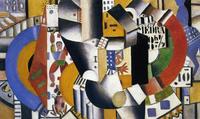
The Circus
Fernand Leger
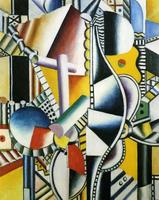
Propellers 2nd state
Fernand Leger
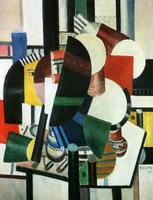
Woman with flower portrait study
Fernand Leger
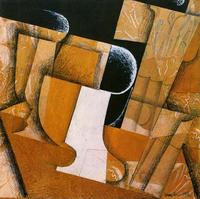
The Glass ( The Fruit Bowl)
Juan Gris