
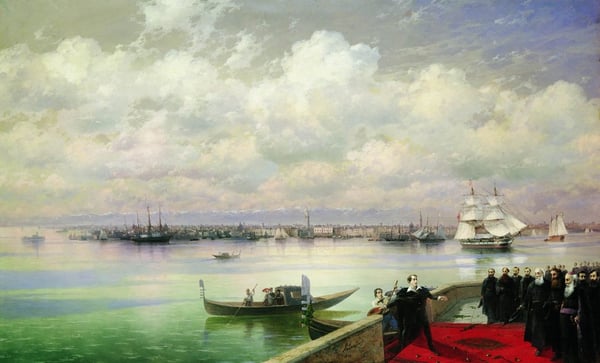
Byron visits the Mkhitarists on the island of St. Lazarus in Venice
Dettagli
Analisi esperta di Byron visits the Mkhitarists on the island of St. Lazarus in Venice di Ivan Aivazovsky
Stile: Romanticism · Genere: genre painting
This painting by Ivan Aivazovsky, "Byron visits the Mkhitarists on the island of St. Lazarus in Venice," is significant within the Romanticism movement for its fusion of historical narrative, cultural identity, and emotional atmosphere. Aivazovsky, best known for his dramatic seascapes, here turns to genre painting to depict a specific, meaningful encounter: the Romantic poet Lord Byron visiting the Armenian Catholic Mkhitarist congregation on the Venetian island of San Lazzaro in 1816.
Expert Analysis & Significance within Romanticism:
-
Subject as a Romantic Ideal: Byron was the quintessential Romantic hero—rebellious, exiled, and deeply engaged with themes of liberty and cultural heritage. The visit to the Mkhitarists (a scholarly Armenian order) reflects Romanticism’s fascination with the exotic, the ancient, and the oppressed. Aivazovsky, himself of Armenian descent, personalizes this encounter, linking the poet’s sympathy for Armenian culture to the Romantic valorization of national identity and resistance.
-
Atmosphere and Lighting: Aivazovsky likely employs his signature skill with light and atmosphere to elevate a quiet genre scene into a sublime moment. The painting probably uses a warm, golden palette (typical of his Venetian works) to bathe the island and figures in a nostalgic, almost sacred glow—reinforcing the Romantic belief that history is felt emotionally rather than merely recorded.
-
Historical and Cultural Significance: The work commemorates a real event where Byron studied Armenian language and history with the Mkhitarist monks, later writing about their cause. Aivazovsky’s choice to depict this rather than a storm-tossed ship underscores Romanticism’s range: not just wild nature, but also the internal drama of cultural encounter and spiritual refuge. The painting serves as a bridge between the Caucasus (Aivazovsky’s heritage) and the Venetian lagoon, embodying Romanticism’s search for universal truths through specific, intimate histories.
-
Within Aivazovsky’s Oeuvre: While Aivazovsky is celebrated for marinescapes like The Ninth Wave, this genre painting shows his ability to convey narrative and human connection. Its significance lies in its quiet heroism: Byron as a sympathetic intellectual, the monks as guardians of a threatened language, and the island as a liminal space where history, poetry, and painting converge.
In short, this artwork is a Romantic meditation on exile, scholarship, and cultural preservation, rendered with Aivazovsky’s atmospheric sensitivity, and stands as a unique testament to the movement’s engagement with real, culturally complex subjects beyond the sublime landscape.
Museum / Gallery
Visivamente simili
20 opere con composizione e palette affini
The Bacino di San Marco with the Doge’s Palace and Santa Maria della Salute in the distance
Alexandre Thomas Francia
Venice
Thomas Moran
View of Venice from Lido
Ivan Aivazovsky

Venice
Ivan Aivazovsky
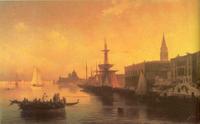
Venice
Ivan Aivazovsky
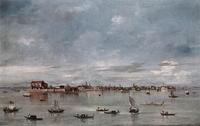
San Cristoforo, San Michele and Murano, Seen from the Fondamenta Nuove
Francesco Guardi
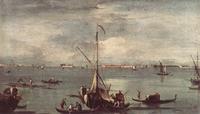
The Lagoon with Boats, Gondolas, and Rafts
Francesco Guardi
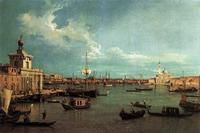
Venice: The Basin from the Giudecca
Canaletto

View to Saint Mark's Square, Venice
Franz Richard Unterberger
A View of Venice
Thomas Moran

Venedig, Eine Mondnacht im Bacino
Karl Heilmayer
Venice
Ivan Aivazovsky
Byron in Venice
Ivan Aivazovsky
Campo Santo, Venice
J.M.W. Turner

Venice
Ivan Aivazovsky

The harbour of Venice, the island of San Georgio
Ivan Aivazovsky

Venice from the Lagoon at Sunset
Ivan Aivazovsky
The Riva degli Schiavoni
Canaletto
The Lagoon Looking toward Murano from the Fondamenta Nuove
Francesco Guardi
Venetian Grand Canal
Thomas Moran