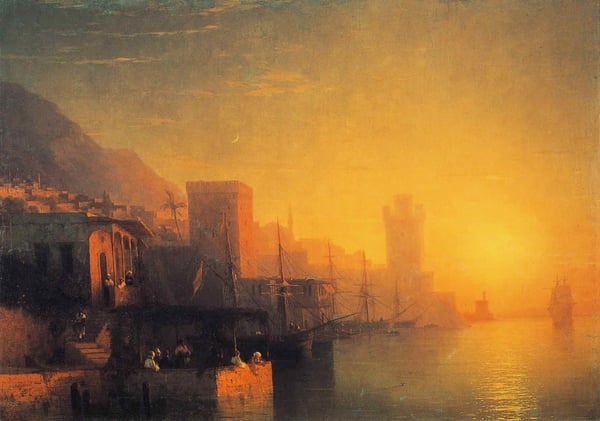
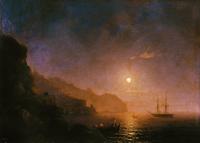
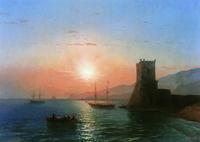
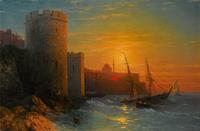
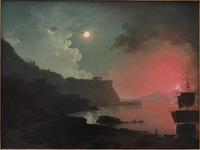
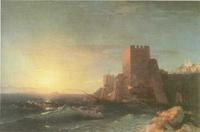
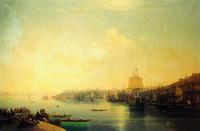
As a Romantic landscape, Ivan Aivazovsky's The Island of Rhodes exemplifies the movement’s emphasis on emotional depth and the sublime power of nature. The island setting allows Aivazovsky to fuse land and sea, transforming the topography into a stage for dramatic atmosphere—likely with dynamic light, vast skies, and turbulent or serene waters that evoke awe and introspection. Within Romanticism, this work is significant for its ability to capture a specific, evocative location (the historic island of Rhodes) while transcending mere topography, aiming instead to stir the viewer’s imagination and emotional response. Aivazovsky’s handling of the landscape genre here would prioritize mood and painterly effect over strict accuracy, making the piece a testament to Romanticism’s celebration of nature’s grandeur and the artist’s personal vision.