Expert Art Historical Analysis
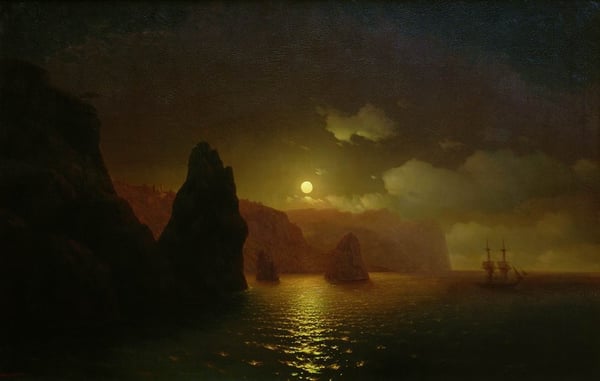
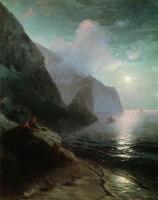
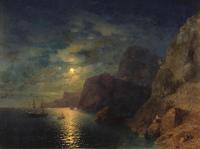
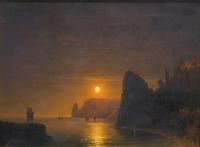
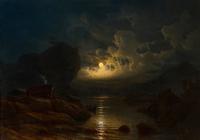
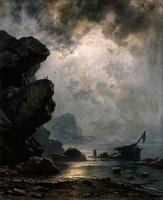
Ivan Aivazovsky’s The monastery of George. Cape Fiolent exemplifies the Romantic landscape genre through its dramatic interplay between nature’s sublime power and human spiritual refuge. As a Romantic work, it elevates the coastal scene beyond mere topography: the rugged cliffs of Cape Fiolent, churning sea, and atmospheric light evoke awe and emotional intensity—hallmarks of Romanticism’s fascination with the untamed natural world. The monastery perched precariously on the cliffside becomes a poignant symbol of faith amidst the sublime, a quiet human presence dwarfed by the vast, dynamic elements. Aivazovsky’s mastery of light and atmosphere—a signature quality—transforms the landscape into a stage for transcendental feeling, making this painting significant as a fusion of Romantic spirituality with the artist’s celebrated depiction of the sea and shoreline. It stands as a quintessential example of how Romanticism used landscape to explore the relationship between humanity, nature, and the divine.