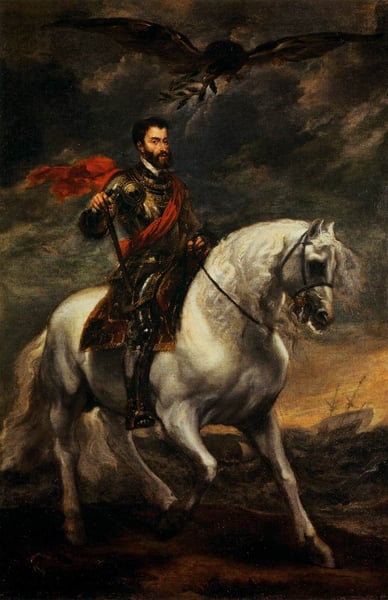
Expert analysis of Anthony van Dyck’s Emperor Charles V on Horseback
Style: Baroque · Genre: portrait
Expert Analysis: Emperor Charles V on Horseback by Anthony van Dyck
This Baroque portrait is a masterful example of how van Dyck elevated the equestrian portrait into a symbol of absolute authority and dynastic power. Painted during a period when the Flemish artist was refining the courtly portrait style he learned from Peter Paul Rubens, the work captures Emperor Charles V—one of the most powerful rulers of the 16th century—as both a military commander and a divinely ordained monarch.
Significance within the Baroque Style:
- Dynamic Composition: The diagonal thrust of the horse and rider, combined with the dramatic sky and low horizon, creates a sense of forward motion and heroic energy characteristic of the Baroque. Van Dyck uses this movement to convey the emperor’s restless ambition and dominion over land and army.
- Theatrical Lighting: The strong chiaroscuro (contrast between light and shadow) emphasizes the emperor’s face and armor, drawing the viewer’s eye to his calm, commanding expression. This spotlight effect reinforces the Baroque interest in emotional engagement and the glorification of the subject.
- Rich Texture and Color: Van Dyck’s fluid brushwork renders the glossy sheen of armor, the soft mane of the horse, and the luxurious red sash with a painterly bravura that exemplifies Baroque opulence.
Significance within the Portrait Genre:
- Icon of Imperial Majesty: Unlike earlier equestrian portraits that focused on the horse’s breed or the rider’s martial skill, van Dyck subsumes both into a unified symbol of rulership. Charles V is not merely a man on horseback; he is an embodiment of the Habsburg Empire—unifying Europe, the New World, and Christendom under one ruler.
- Psychological Depth: Van Dyck famously imbued his sitters with an air of aristocratic ease and introspection. Here, the emperor’s slight turn of the head and steady gaze suggest not only authority but also the burden of power—a nuanced psychological portrait that transcends mere propaganda.
- Influence on Later Portraiture: This work set a standard for equestrian portraiture that would be emulated by later artists (e.g., Velázquez in Philip IV on Horseback). Van Dyck’s ability to merge Baroque drama with refined elegance made the equestrian portrait a staple of royal self-representation for centuries.
In summary, Emperor Charles V on Horseback is significant because it synthesizes Baroque dynamism with the psychological sophistication of a great portraitist, creating an enduring image of imperial majesty that is both grand and intimate. It stands as a pivotal work in van Dyck’s career and in the history of royal portraiture.
Museum / Gallery
Visually similar
20 works with related composition and palette
Equestrian Portrait of Charles I, King of England
Anthony van Dyck
Charles V, Holy Roman Emperor
Charles Turner
Charles I on horseback
Anthony van Dyck
Philip Ii on Horseback
Peter Paul Rubens
Equestrian Portrait of Philip III
Diego Velazquez
Equestrian Portrait of Giancarlo Doria
Peter Paul Rubens
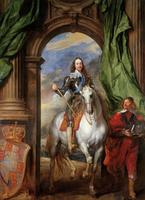
Equestrian Portrait of Charles I, King of England with Seignior de St Antoine
Anthony van Dyck
Charles I On Horseback
Anthony van Dyck
The Cardinal Infante
Peter Paul Rubens
Equestrian Portrait of the Duke of Lerma
Peter Paul Rubens
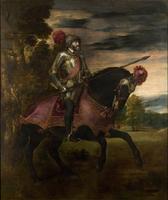
Emperor Charles V at Muhlberg
Titian
Triumph of Charles III at the Battle of Velletri
Francesco Solimena
Charles II, King of Spain, on Horseback
Luca Giordano
Allegorical Portrait of Philip IV
Diego Velazquez
Equestrian Portrait of Henri De La Tour D'auvergne, Vicomte De Turenne
Adam van der Meulen
Louis XIV, Equestrian Portrait
Charles Le Brun
John of Austria the Younger
Jusepe de Ribera
Marie de Medici at Pont-de-Ce
Théodore Géricault
Frederick V, King of Bohemia
Charles Turner
Reiter
Piotr Michałowski