
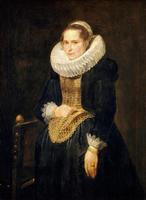
Expertenanalyse zu Anthony van Dycks The Wife and Daughter of Colyn de Nole
Stil: Baroque · Genre: portrait
Expert Analysis: "The Wife and Daughter of Colyn de Nole" by Anthony van Dyck
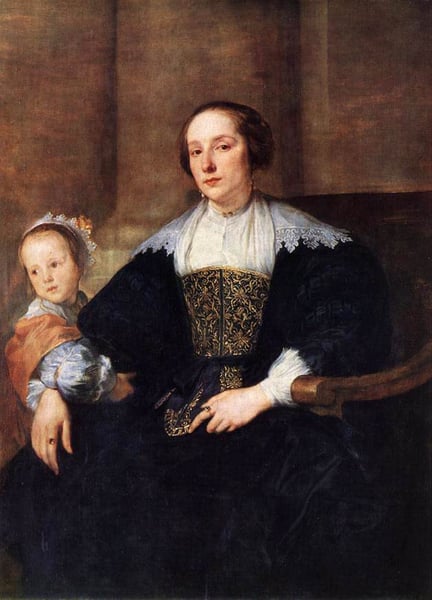
This double portrait by Anthony van Dyck exemplifies the Flemish Baroque’s fusion of aristocratic elegance with intimate psychology. The painting depicts the wife and daughter of Colyn de Nole, a prominent Antwerp sculptor, and stands as a masterclass in the Baroque artist’s ability to imbue a formal portrait with warmth and narrative tension.
Significance within the Baroque Period:
-
Psychological Depth: Van Dyck transcends the conventional dynastic portrait by capturing a tender, fleeting moment. The mother’s protective gesture and the daughter’s trusting glance suggest a private bond, elevating the work from mere likeness to a study of familial affection—a hallmark of van Dyck’s mature style.
-
Dynamic Composition: True to Baroque dynamism, the figures are arranged in a subtle contrapposto, with the daughter’s upward gaze and flowing drapery creating a spiraling movement that draws the viewer’s eye. This asymmetry avoids static formality, instead generating a lively, almost theatrical interaction that was revolutionary for 17th-century portraiture.
-
Luminous Palette and Textural Richness: Van Dyck’s signature use of rich, warm hues (deep burgunds, creamy whites, and muted golds) and his virtuosic handling of fabrics—from the shimmering silk of the mother’s dress to the soft lace—embody the Baroque obsession with sensory opulence. The subtle chiaroscuro models the faces with a soft radiance, emphasizing the sitters’ refinement while avoiding harsh drama.
-
Cultural Status: As a portrait of a sculptor’s family (not royalty or high nobility), the work reflects the rising prestige of the artist class in 17th-century Flanders. Van Dyck, himself a court painter, here grants the same dignity and grace to a colleague’s family as he would to monarchs, reinforcing the Baroque belief in art as a universal language of status and humanity.
In summary, this painting is significant for its intimate yet authoritative portrayal, its dynamic Baroque structure, and its role in expanding the scope of portraiture to embrace both private emotion and public sophistication—qualities that cemented van Dyck’s legacy as the defining portraitist of the Flemish Baroque.
Museum / Gallery
Visuell ähnlich
20 Werke mit ähnlicher Komposition und Farbpalette
Portrait of a Lady with Her Daughter
Cornelis de Vos
Portrait of Susanna Fourment and Her Daughter
Anthony van Dyck
Portrait of a dogaressa
Domenico Tintoretto
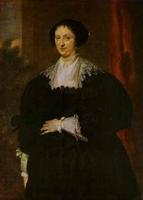
Portrait of a Lady Dressed in Black, Before a Red Curtain
Anthony van Dyck
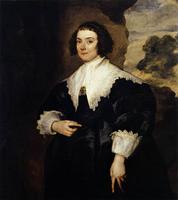
Portrait of Isabella van Assche, Wife of Justus van Meerstraten (d.1639) 1634 35 (oil on canvas)
Anthony van Dyck
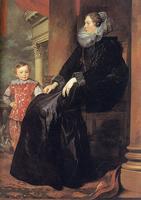
Genoese Noblewoman with her Son
Anthony van Dyck
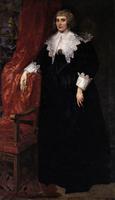
Portrait of Anna van Craesbecke
Anthony van Dyck
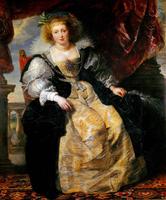
Helena Fourment
Peter Paul Rubens
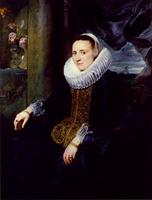
Margareta Snyders
Anthony van Dyck
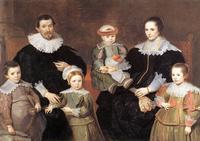
The Family of the Artist
Cornelis de Vos
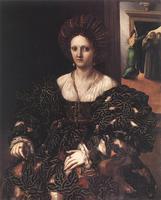
Portrait of a Woman
Giulio Romano
Portret Van Elisabeth Dell
Ferdinand Bol
Portrait of a Lady with a Fan
Cornelis de Vos
Marie de Raet
Anthony van Dyck
Portrait of a Young Woman
Cornelis de Vos
Anna of Habsburg Queen of France
Peter Paul Rubens
Portrait of a Lady
Jacob Jordaens
Portrait of a Lady
Anthony van Dyck
Portrait of a Woman
Cornelis de Vos
Portrait of a Flemish Lady
Anthony van Dyck