Expert Analysis: "Albert, Cardinal Elector of Mainz at the foot of the Cross" – Lucas Cranach the Elder
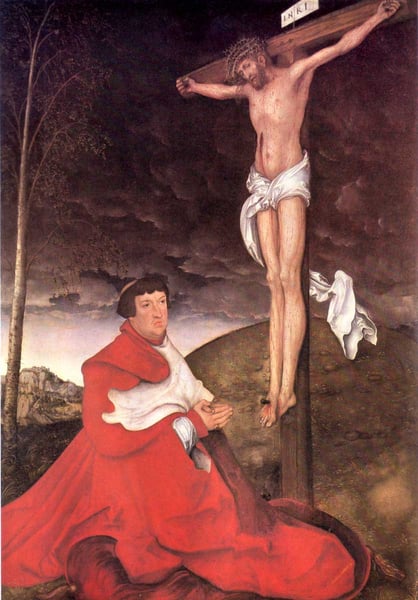
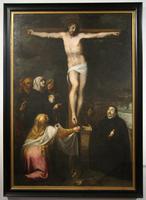
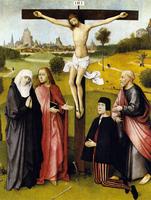
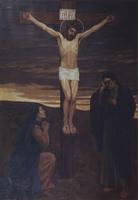
This work by Lucas Cranach the Elder stands as a compelling example of Northern Renaissance religious painting, distinguished by its fusion of portraiture and devotional imagery. The painting’s significance lies in how it personalizes the sacred narrative, placing a contemporary ecclesiastical figure—Cardinal Albert of Mainz, a powerful prince-elector and patron of the arts—directly at the foot of the Cross. This insertion of a living, identifiable church leader into the Passion scene reflects the Northern Renaissance’s preoccupation with aligning contemporary spirituality with biblical history, as well as the era’s interest in the individual’s relationship with salvation.
Stylistically, Cranach’s handling of the subject exemplifies the Northern Renaissance’s characteristic blend of meticulous naturalism and symbolic clarity. The crucifixion is rendered with a stark, emotional immediacy typical of the period, while the Cardinal’s portrait is detailed with the precise, linear elegance that Cranach developed at the court of Saxony. The composition’s vertical thrust—drawing the eye from the kneeling Cardinal up to Christ—reinforces the theological message of intercession and grace.
Within Cranach’s own oeuvre, this work is notable for its combination of courtly portraiture with a Reformation-era religious subject. The Cardinal, a staunch Catholic opponent of Luther, is depicted in a humble, penitent posture, highlighting the Northern Renaissance’s capacity to invest traditional iconography with political and confessional nuance. Ultimately, the painting’s significance lies in its synthesis of an individual’s earthly status with timeless spiritual drama, a hallmark of the period’s art that gave religious imagery new personal and social relevance.