Expertenanalyse zu Lucas Cranach the Elders Albrecht of Brandenburg as St. Jerome in his study
Stil: Northern Renaissance · Genre: portrait
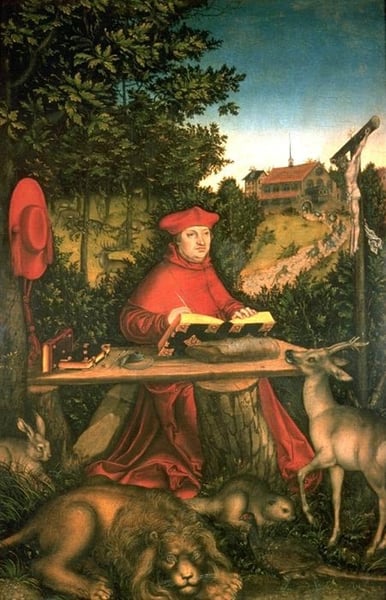
Expert Analysis: "Albrecht of Brandenburg as St. Jerome in his Study" by Lucas Cranach the Elder
This work is a masterful example of Northern Renaissance portraiture that collapses the boundaries between contemporary identity and sacred typology. Lucas Cranach the Elder, court painter to the Electors of Saxony and a close friend of Martin Luther, presents Cardinal Albrecht of Brandenburg—a powerful prince of the Church and a major patron of the arts—in the guise of St. Jerome, the fourth-century scholar-saint. This conflation is not merely decorative but deeply significant within the religious and political upheavals of early 16th-century Germany.
Composition and Symbolism
The painting depicts Albrecht seated in a book-lined study, a setting that explicitly references Jerome’s scholarly life (the saint is best known for translating the Bible into Latin, the Vulgate). On the desk rest an open book, a crucifix, and a cardinal’s hat—objects that signal both Jerome’s status as a Doctor of the Church and Albrecht’s own high ecclesiastical rank. The lion, traditionally Jerome’s companion from the legend of the thorn pulled from its paw, is present as a tame, watchful creature, reinforcing the saint’s (and by extension Albrecht’s) ability to tame wild nature through faith and learning. Cranach’s crisp, linear style and precise rendering of textures—from fur to velvet to gilded book edges—demonstrate the Northern Renaissance preoccupation with empirical detail, while the cool, enamel-like colours (greens, deep reds, golds) reflect the artist’s workshop’s distinctive palette.
Historical and Theological Significance
Albrecht of Brandenburg was not only a cardinal but also the Archbishop of Mainz and a leading figure in the indulgence controversy that sparked the Reformation. By portraying himself as St. Jerome, Albrecht advances a powerful visual argument: he is a learned, pious Church reformer in the vein of the early Church Fathers, not a corrupt sell-off of salvation. Ironically, Cranach—who produced Reformation propaganda for Luther—painted this work as a commission from Albrecht himself, illustrating the complex patronage networks of the era. The painting thus embodies the tension between humanist ideals and confessional conflict, showcasing a Catholic prince using the same humanist visual language that Protestant allies (like Cranach) employed.
Significance within the Northern Renaissance
This work is significant because it epitomizes the Northern Renaissance’s fascination with intercession—the ability of a portrait to act as a moral exemplar. Unlike the idealized, timeless figures of the Italian Renaissance, Northern portraits often anchor their subjects in specific, tangible environments that invite meditation on virtue and learning. Here, Cranach synthesizes the portrait (a record of individual likeness) with the sacra conversazione tradition (holy figures in domestic settings), creating a devotional image that also serves as political self-fashioning. The painting also demonstrates Cranach’s skill in balancing the sacred and the secular, a hallmark of his career and of Northern art in an age of religious transformation.
In sum, "Albrecht of Brandenburg as St. Jerome in his Study" is a layered statement of identity, faith, and authority. It reveals how Northern Renaissance artists used precision and allegory to navigate the turbulent currents of Reformation Europe, making the familiar face of a cardinal a timeless icon of Christian scholarship.
Visuell ähnlich
20 Werke mit ähnlicher Komposition und Farbpalette
Triptych of Willem Moreel, left wing, the founder Willem Moreel, his sons and St. William of Maleval
Hans Memling
Martyrdom of St. Erasmus (left wing)
Dirk Bouts
The Stone Operation / The Extraction of the Stone Madness / The Cure of Folly
Hieronymus Bosch
Saint John the Evangelist on Patmos
Dirk Bouts
Praying Donor with St. William of Maleval
Hans Memling
St. Jerome and the Lion
Hans Memling
Martyrdom of St. Erasmus (right wing)
Dirk Bouts
St. Mary Salome and Zebedee with John the Evangelist and James the Great
Bernhard Strigel
Portrait of Conrad Rehlinger and his Children
Bernhard Strigel
Donor with St. Nicholas and his Wife with St. Godelina
Jan Provoost
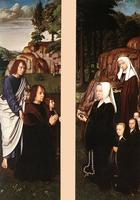
Triptych of Jean Des Trompes (side panels - donors)
Gerard David
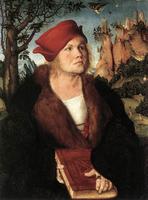
Dr. Johannes Cuspinian
Lucas Cranach the Elder
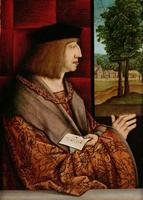
Emperor Maximilian I (1459-1519)
Bernhard Strigel
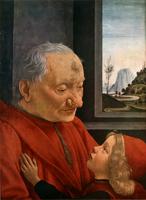
Old Man with a Young Boy
Domenico Ghirlandaio
Werl Altarpiece
Robert Campin
Johannes Reuss
Lucas Cranach the Elder
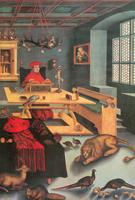
Albrecht of Brandenburg as St. Jerome in his study
Lucas Cranach the Elder
Portrait of a Male and Female Donor
Petrus Christus
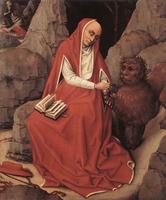
Saint Jerome and the Lion
Rogier van der Weyden
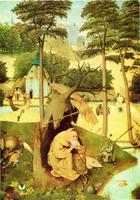
The Temptation of St Anthony (detail)
Hieronymus Bosch