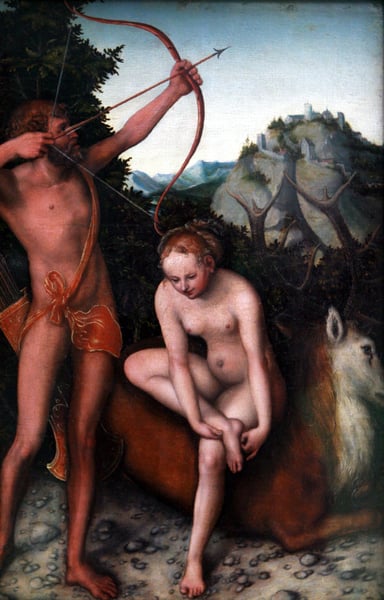
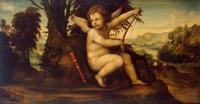
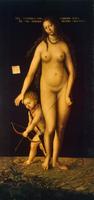
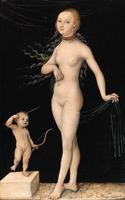
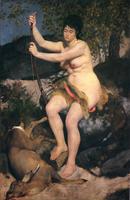
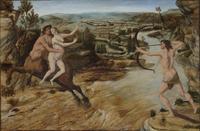
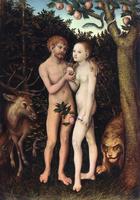
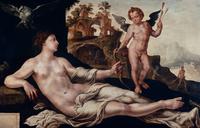
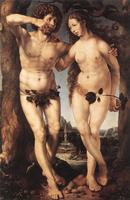
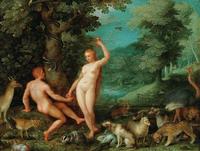
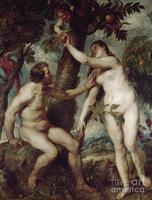
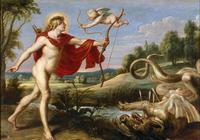
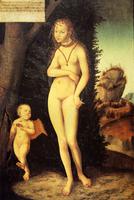
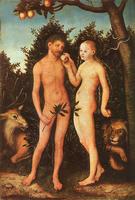
As a mythological painting from the Northern Renaissance, Apollo and Diana by Lucas Cranach the Elder is significant for its fusion of classical subject matter with the distinctive naturalism and meticulous detail characteristic of Northern European art. The work demonstrates how Renaissance humanism spread beyond Italy, adapting ancient Greek and Roman themes—here embodied by the twin deities of the sun and the hunt—into a visual language that emphasizes precise linework, rich surface textures, and a landscape setting rooted in Northern European observation. This blending of mythological narrative with Northern aesthetic conventions marks the piece as a key example of the region’s engagement with classical antiquity, highlighting Cranach’s role in translating idealized, often courtly mythological scenes into a format that feels both learned and intimately grounded in the material world.