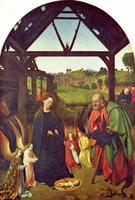
Expert Analysis: "Altarpiece of St. Augustine – Adoration of the Shepherds" by Pietro Perugino
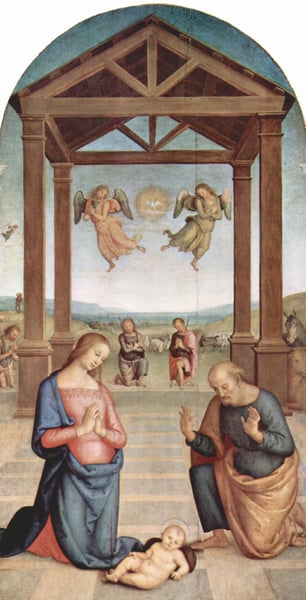
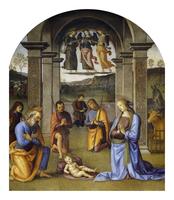
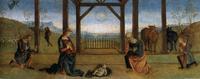
This work exemplifies the serene, balanced clarity of the High Renaissance in central Italy. Perugino, a master of the Umbrian school and a direct influence on Raphael, achieves a compositional harmony that is both devotional and visually compelling. The scene’s centrality—the adoration of the shepherds—is rendered with a calm, almost suspended sense of time, typical of Perugino’s mature style. The figures are arranged in a graceful, pyramidal grouping, with the Virgin and Child at the apex, while the shepherds and angels create a rhythm of gentle gestures and downward glances. Perugino’s use of atmospheric perspective, seen in the soft, luminous landscape receding into a distant, hazy horizon, roots the sacred event in a credible, tranquil space. This blending of sacred narrative with naturalistic setting was a hallmark of High Renaissance religious painting, designed to inspire piety through beauty and order. The altarpiece’s function as a focal point for private or communal devotion is enhanced by Perugino’s delicate color harmonies—pale blues, rose, and gold—which lend an otherworldly grace to the humble scene. Its significance lies in how it crystallizes the period’s ideals: a perfect fusion of perspective, composition, and spiritual emotion, prefiguring the more dramatic approaches of later masters while standing as a pristine example of Perugino’s refined, lyrical Renaissance vision.