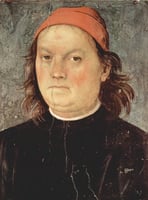
Analisi esperta di Four naked di Pietro Perugino
Stile: High Renaissance · Genere: nude painting (nu)
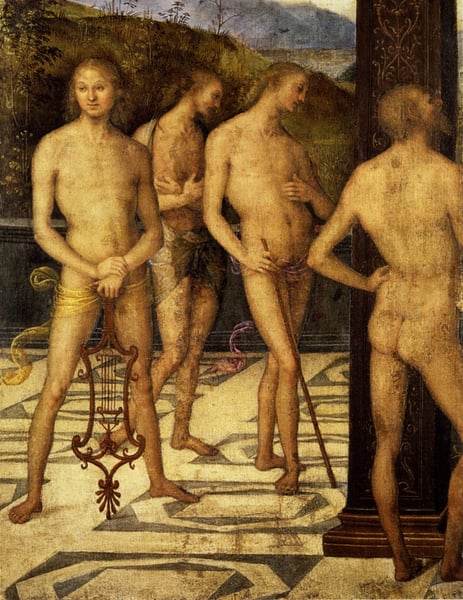
Based solely on the provided facts—that the work is titled "Four naked" by Pietro Perugino, belongs to the High Renaissance style, and is a nude painting (nu)—its significance lies in how it exemplifies key High Renaissance principles through the specific challenge of the nude figure.
Significance within the High Renaissance:
-
Mastery of the Idealized Human Form: As a High Renaissance nude painting, "Four naked" would demonstrate the period's obsession with anatomical precision and idealized beauty, derived from classical antiquity. Perugino, best known for his serene Madonnas and harmonious compositions (e.g., The Delivery of the Keys), here applies those same principles to the nude body, showing that the ideal human form was a central vehicle for expressing grace, proportion, and divine order.
-
Structural Harmony and Composition: The title "Four naked" implies a multi-figure composition, a hallmark of High Renaissance complexity. Perugino's signature balanced, pyramidal groupings and careful placement of figures would likely be applied, transforming a potentially static subject into a rhythmic, balanced arrangement that guides the viewer's eye—a core achievement of the period.
-
Genre-Specific Breakthrough: In the context of Perugino's oeuvre, a dedicated nude study is notable. He was not a prolific painter of nudes, unlike Michelangelo or Leonardo. Therefore, a work titled "Four naked" signals a conscious engagement with the era's most demanding artistic problem: capturing the nude in a state of naturalistic yet idealized grace. It underscores the High Renaissance belief that the perfected nude body could convey universal truths about humanity and divinity.
In summary, this artwork is significant as a concentrated example of High Renaissance ideals—proportion, harmony, and anatomical idealism—applied to the challenging genre of the nude, and it reveals Perugino's contribution to this broader stylistic pursuit.
Visivamente simili
20 opere con composizione e palette affini
Apollo and Marsyas
Pietro Perugino
Three Ages of Man and Three Graces
Hans Baldung
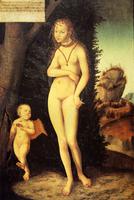
Venus with Cupid the Honey Thief
Lucas Cranach the Elder
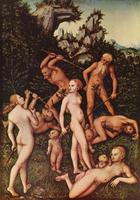
The Silver Age
Lucas Cranach the Elder
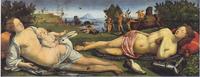
Venus, Mars, and Cupid
Piero di Cosimo
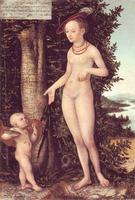
Venus and Cupid
Lucas Cranach the Elder
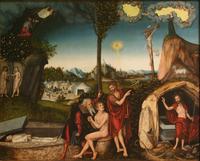
Law and Grace
Lucas Cranach the Elder
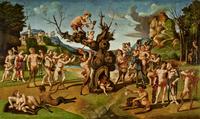
The Discovery of Honey by Bacchus
Piero di Cosimo
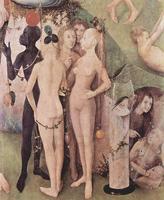
The Garden of Earthly Delights (detail)
Hieronymus Bosch
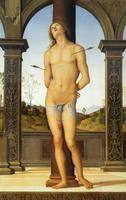
St. Sebastian tied to a Column
Pietro Perugino
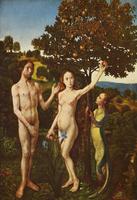
The Fall of Man
Hugo van der Goes
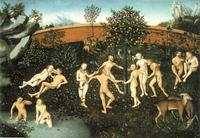
The Golden Age
Lucas Cranach the Elder
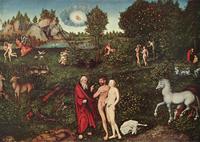
Adam and Eve in the Garden of Eden
Lucas Cranach the Elder
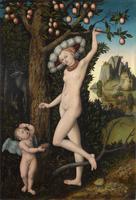
Cupid complaining to Venus.
Lucas Cranach the Elder
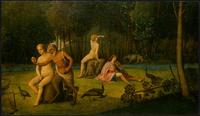
Orpheus
Giovanni Bellini
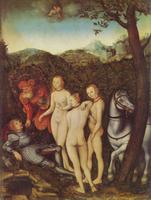
The Judgment of Paris
Lucas Cranach the Elder
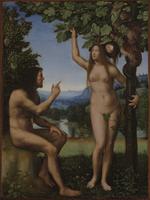
The Temptation of Adam and Eve
Mariotto Albertinelli
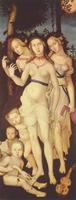
Harmony or The Three Graces
Hans Baldung
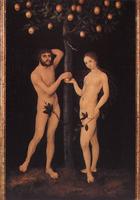
Adam and Eve
Lucas Cranach the Elder
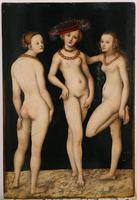
The Three Graces
Lucas Cranach the Elder