Expert analysis of Pietro Perugino’s St. Sebastian tied to a Column
Style: High Renaissance · Genre: religious painting
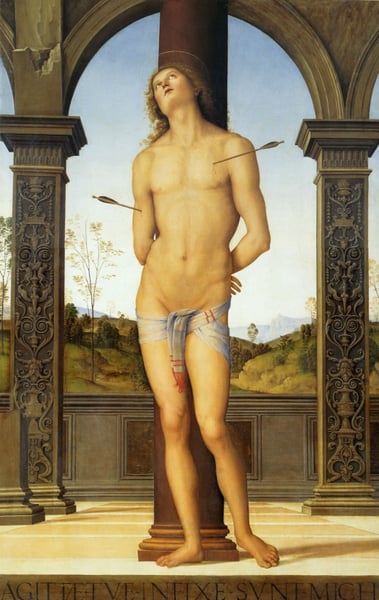
This analysis is based solely on the provided facts: the artwork is "St. Sebastian tied to a Column" by Pietro Perugino, created in the High Renaissance style and belonging to the religious painting genre.
Expert Analysis
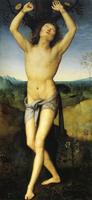
Pietro Perugino’s St. Sebastian tied to a Column exemplifies the core tenets of the High Renaissance style applied to a traditional religious subject. The painting’s significance lies in how Perugino transforms a scene of violent martyrdom into a monument of serene, classical harmony—a hallmark that would profoundly influence his pupil, Raphael.
Key Significance Within the High Renaissance:
-
Idealized Calm Over Pathos: Unlike earlier (or later) depictions that emphasize the saint’s agony through contorted posture or dramatic emotion, Perugino presents Sebastian with a composed, almost detached grace. The figure stands in a delicate contrapposto, his body a study in balanced proportions. This choice reflects the High Renaissance belief that art should elevate the viewer toward a divine, rational beauty, even when depicting suffering. The pain is implied, not screamed.
-
Harmonious Composition and Spatial Clarity: Perugino structures the scene with a mathematical clarity typical of the period. The column anchors the center, while the arrows pierce the body in a rhythm that seems almost decorative rather than chaotic. The background—likely a calm Umbrian landscape with delicate, atmospheric perspective—places the saint in a world of order and light. This mastery of space and symmetry creates a devotional image that invites quiet contemplation rather than visceral shock.
-
Perugino’s Role as a High Renaissance Master: As a leading painter of his generation, Perugino defined the “sweet” or “graceful” style of the Umbrian school. This painting demonstrates his signature soft sfumato modeling of flesh and drapery, his limpid colors, and the gentle, unearthly beauty of his figures. It is a textbook example of how High Renaissance religious painting sought to reconcile naturalism with an idealized, spiritual serenity—making the divine seem both accessible and transcendent.
In summary, St. Sebastian tied to a Column is significant because it embodies the High Renaissance’s highest ambition: to render a sacred narrative through a lens of perfect balance, clarity, and idealized form, turning a moment of physical trial into a timeless emblem of faith and beauty.
Visually similar
20 works with related composition and palette
St. Sebastian
Andrea Mantegna
San Sebastiano E Due Devoti
Antoniazzo Romano
St. Quintinus
Jacopo Pontormo
Saint Sebastian
Bernardino Luini
Polyptych of San Vincenzo Ferreri
Giovanni Bellini
St. Sebastian
Pietro Perugino
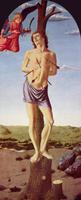
Saint Sebastian
Francesco Botticini
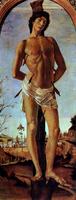
Sebastian
Sandro Botticelli
Dead Christ Supported by Two Angels
Giovanni Bellini
Dead Christ in the Sepulchre
Giovanni Bellini
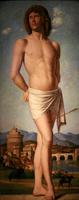
Saint Sebastian
Cima da Conegliano
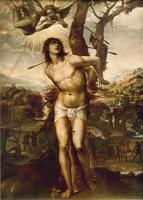
St Sebastian
Il Sodoma
Saint Sebastian
Carlo Crivelli
Christ in the Sepulchre
Sandro Botticelli
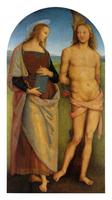
Pala di Sant Agostino (Sant Irene and St. Sebastian)
Pietro Perugino
DER HEILIGE SEBASTIAN
Franz Anton Zeiller
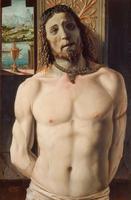
Christ at the Column
Donato Bramante
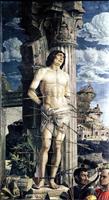
San Sebastian
Andrea Mantegna
Four naked
Pietro Perugino
Apollo and Marsyas
Pietro Perugino