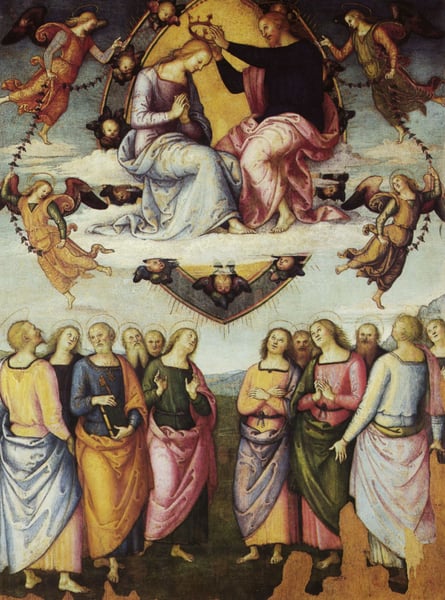
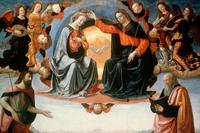
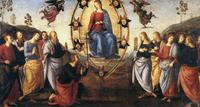
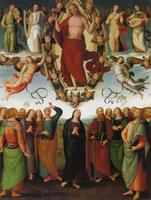
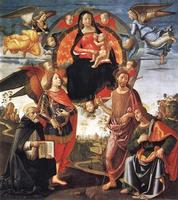
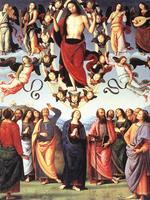
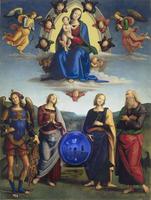
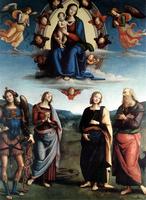
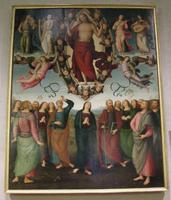
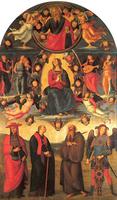
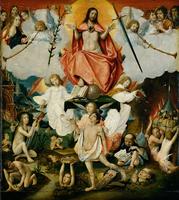
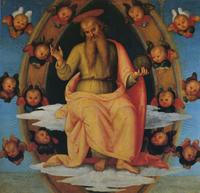
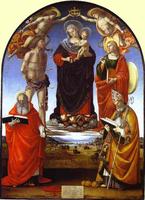
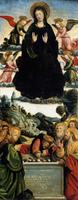
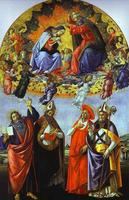
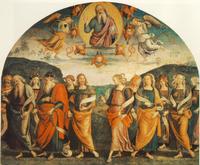
The "Pala di San Francesco al Monte (The Coronation of the Virgin)" by Pietro Perugino is a quintessential example of High Renaissance religious painting. Its significance lies in how it embodies the core ideals of the period: a harmonious balance between divine subject matter and naturalistic, serene human forms. Perugino’s work is celebrated for its clear, ordered composition, soft atmospheric perspective, and the graceful, ethereal quality of his figures—all of which are hallmarks of the early High Renaissance. As a leading master of this style and the teacher of Raphael, Perugino’s treatment of the Coronation theme demonstrates the transition from the more rigid conventions of the 15th century toward the idealized, lyrical naturalism that would define the High Renaissance. The painting’s calm, devotional clarity and geometric spatial organization make it a key reference for understanding how religious narratives were transformed into elevated, universal visions of harmony during this period.