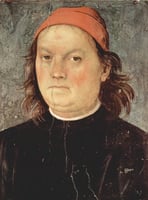
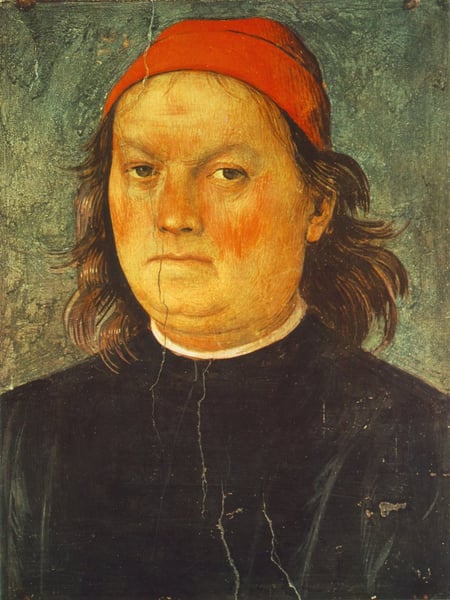
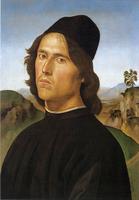
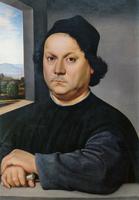
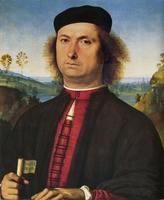
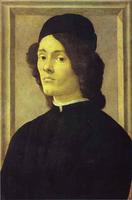
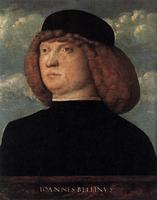
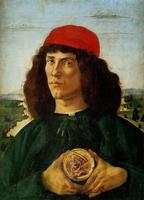
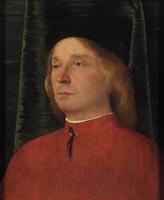
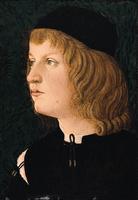
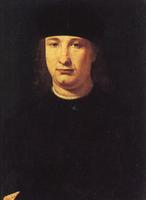
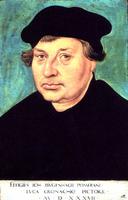
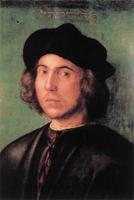
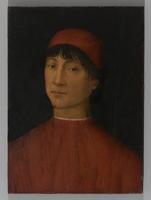
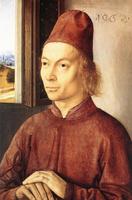
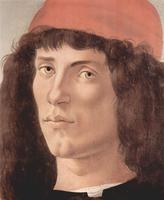
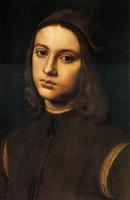
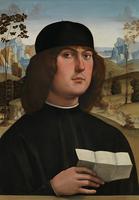
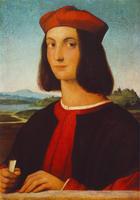
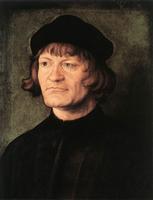
This self-portrait by Pietro Perugino exemplifies the core ideals of the High Renaissance, a period defined by harmony, balance, and serene naturalism. As a leading master of the Umbrian school and the direct teacher of Raphael, Perugino’s own likeness offers a significant window into the era’s artistic self-awareness. The work is notable for its calm, composed expression and the clarity of form that characterizes the mature Renaissance—focusing not on dramatic emotion but on an idealized, intellectual presence. The self-portrait genre itself highlights the rising status of the artist as an individual creator, and Perugino’s rendering reflects the shift toward a more human-centered, measured portrayal of the self, anticipating the psychological depth his student would later perfect. Its significance lies in its embodiment of High Renaissance visual language: spatial coherence, soft modeling, and a dignified humanity that elevates the artist’s own image to a timeless, classical statement.