Pietro Perugino sanatçısının The Adoration of the Magi (particular detail) eseri hakkında uzman analizi
Tarz: Early Renaissance · Tür: religious painting
Expert Analysis: "The Adoration of the Magi (particular detail)" by Pietro Perugino
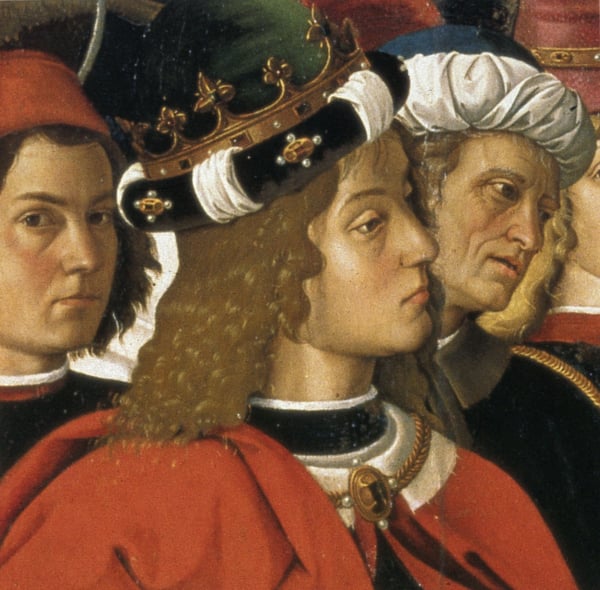
As a defining work of the Early Renaissance, this detail from Perugino's Adoration of the Magi exemplifies the period's shift toward rational space, naturalistic emotion, and harmonious composition. Perugino, a master of the Umbrian school and a teacher of Raphael, is celebrated for his ability to balance devotional gravity with lyrical grace—a quality that makes this painting a landmark of early quattrocento religious art.
Significance in Style and Period:
- Linear Perspective & Spatial Clarity: True to Early Renaissance ideals, Perugino constructs a convincing, receding space. In the full composition (and evident in any detailed crop), the stable, the distant landscape, and the figures are arranged along a clear vanishing point. This detail likely showcases his signature use of soft, atmospheric background hills and trees, creating depth without overwhelming the sacred narrative.
- Serene, Idealized Figures: Perugino’s figures are characterized by gentle, pensive expressions and a serene, almost ethereal dignity. The Magi’s adoration is depicted with quiet reverence, not theatrical emotion—a hallmark of his style that influenced the later High Renaissance. The detailed rendering of fabrics, gold trim, and hands demonstrates meticulous observation, yet the overall mood remains contemplative.
- Synthesis of Naturalism and Symmetry: While the scene is structured with balanced groupings, Perugino introduces subtle variety in pose and gesture, avoiding stiffness. This detail might capture the moment of kneeling, gift-offering, or the Christ child’s blessing—each figure individually nuanced yet part of a unified, harmonious whole.
What Makes This Work Significant:
- Bridge to Raphael: Perugino’s compositional clarity and soft modeling directly prefigure his pupil Raphael’s Madonna paintings and Adoration scenes. This detail encapsulates the ideal of “perfezione” (perfection) that defined Early Renaissance devotional art.
- Emphasis on Devotional Intimacy: Unlike later Mannerist or Baroque interpreters, Perugino emphasizes a quiet, focused adoration—the Magi’s humility and the Holy Family’s grace are the true subjects. The “particular detail” likely highlights the psychological connection between the worshippers and the divine, a humanistic touch that made religious imagery accessible and moving for 15th-century viewers.
In summary, this detail from Perugino’s Adoration of the Magi is a microcosm of Early Renaissance achievement: it marries scientific perspective with spiritual tenderness, setting a standard for narrative clarity and emotional restraint that would define Italian art for decades.
Görsel olarak benzer
İlişkili kompozisyon ve renk paletine sahip 20 eser
Portrait of Emperor Maximilian and His Family
Bernhard Strigel
The Lady of the festival du Rosaire(fragment)
Albrecht Durer
Procession of the Magus Balthazar (detail)
Benozzo Gozzoli
Saint Catherine
Rogier van der Weyden
St. Augustine Departing for Milan (detail)
Benozzo Gozzoli
The Martyrdom of St. Catherine
Jan Provoost
Hans Tucher
Albrecht Durer
Roman soldiers and Jewish judges (left wing from the Triptych of the Crucifixion)
Gerard David
Adoration of the Magi: Whole Triptych
Hans Memling
The Judgement of Cambyses
Gerard David
Portinari Triptych (detail)
Hugo van der Goes
Group of Men
Rogier van der Weyden
Jesus in front of Pontius Pilate
Jan Joest
St. Catherine and St. Barbara
Lucas Cranach the Elder
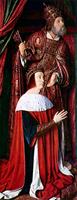
Peter II de Beaujeu of Bourbon with St. Peter - left wing of the Bourbon Altarpiece
Jean Hey
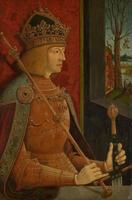
Maximilian I (1459-1519)
Bernhard Strigel
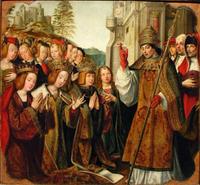
Bênção de Santa Auta em Lisboa
Cristovao de Figueiredo
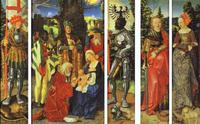
The Three Kings Altarpiece
Hans Baldung
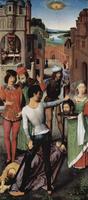
Triptych of the Mystical Marriage of St. Catherine of Alexandria, left wing: The Beheading of John the Baptist
Hans Memling
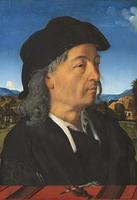
Giuliano da San Gallo
Piero di Cosimo