Expert analysis of Pietro Perugino’s The Pazzi Crucifixion
Style: High Renaissance · Genre: religious painting
This analysis is based solely on the provided structured facts.
- Artwork: The Pazzi Crucifixion
- Artist: Pietro Perugino
- Style: High Renaissance
- Genre: Religious painting
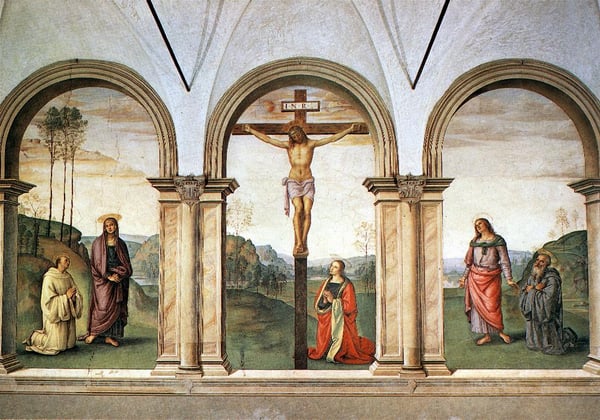
The significance of The Pazzi Crucifixion lies in its embodiment of the core tenets of the High Renaissance style as applied to a religious subject. As a work by Pietro Perugino, it represents the mature phase of the Renaissance, characterized by clarity, balance, and idealized harmony.
Key points of significance:
- Stylistic ideal: The painting exemplifies the High Renaissance pursuit of disegno (draftsmanship) and sfumato (soft transitions), leading to a serene, ordered composition. The use of atmospheric perspective and balanced groupings reflects the period’s move toward naturalism and geometric stability.
- Religious expression: As a religious painting, the work transcends mere narrative. It uses the High Renaissance language of calm dignity and symmetrical arrangement to convey spiritual transcendence. The crucifixion is not depicted with violent emotion but as a moment of divine stillness, typical of Perugino’s devotional approach.
- Perugino’s place: Perugino was among the first masters of the High Renaissance, and The Pazzi Crucifixion demonstrates his signature ability to create a unified, lyrical space. The work prefigures the classicism that Raphael (his pupil) would later perfect, making it a pivotal example of the transition from early to high Renaissance religious art.
In short, the work is significant for its synthesis of High Renaissance formal ideals with a reverent, contemplative religious narrative, marking a high point in the period’s artistic and spiritual expression.
Museum / Gallery
Visually similar
20 works with related composition and palette
The Crucifixion
Pietro Perugino
Annunciation
Filippo Lippi
The Confirmation of the Olivetan Order by the Bishop of Arezzo
Il Sodoma
Life of St Benedict, Scene 19. Benedict Sends Away the Harlots
Il Sodoma
Polyptych Albani Torlonia
Pietro Perugino
Annunciation
Filippo Lippi
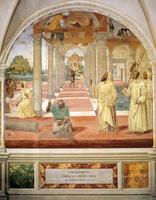
Life of St Benedict, Scene 11. Benedict Founds Twelve Monasteries
Il Sodoma
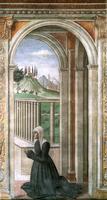
Portrait of the Donor Francesca Pitti Tornabuoni
Domenico Ghirlandaio
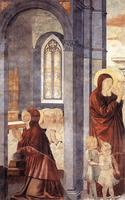
St. Augustine Leaving His Mother
Benozzo Gozzoli
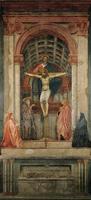
The Holy Trinity
Masaccio
Life of St Benedict, Scene 13. Benedict Frees a Monk
Il Sodoma
Madonna and Child with St. Sebastian and St. Julian
Domenico Ghirlandaio
Life of St Benedict, Scene 31. Benedict Feeds the Monk
Il Sodoma
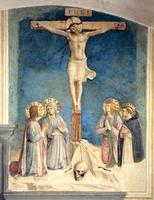
Crucifixion with the Virgin and Sts. Cosmas, John the Evangelist and Peter Martyr
Fra Angelico
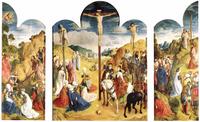
Calvary Triptych
Hugo van der Goes
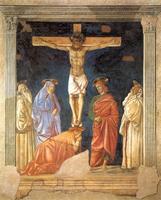
Crucifixion and Saints
Andrea del Castagno
Loggia (the Founding of Rome)
Gentile da Fabriano
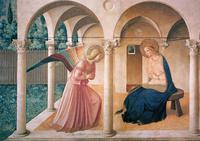
Annunciation
Fra Angelico
Sacred Conversation
Fra Angelico
Birth and Naming St. John
Filippo Lippi