Expert analysis of Bartolome Esteban Murillo’s The Adoration of the Shepherds
Style: Baroque · Genre: religious painting
Expert Analysis: "The Adoration of the Shepherds" by Bartolomé Esteban Murillo
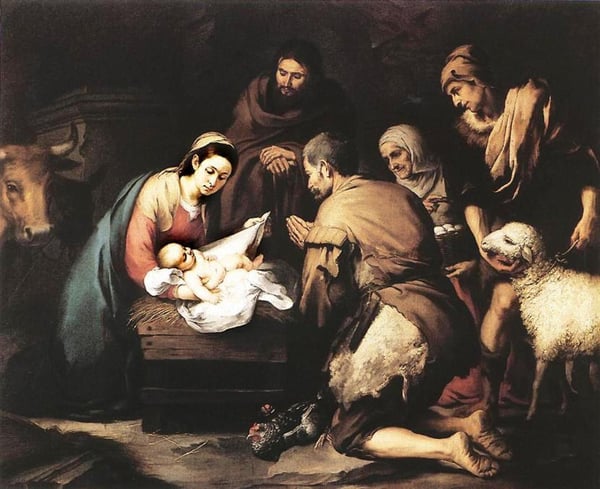
As a masterpiece of the Spanish Baroque, Murillo’s The Adoration of the Shepherds exemplifies the era’s fusion of naturalism, emotional accessibility, and profound religious sentiment. Unlike the dramatic, high-contrast tenebrism of contemporaries like Caravaggio or Zurbarán, Murillo employs a softer, more luminous chiaroscuro that bathes the Christ child in a warm, celestial glow while casting the stable in a gentle, unthreatening twilight. This treatment lightens the scene, inviting the viewer into an intimate, human moment rather than an awe-inspiring spectacle.
Significance within the Baroque period:
-
Humanizing the Divine – Murillo’s shepherds are not idealized figures; they are weathered, humble peasants whose rags and calloused hands convey genuine, unadorned awe. Their postures—kneeling, reaching, or gazing in wonder—emphasize the Baroque emphasis on direct, empathetic spiritual experience. The Christ child’s soft, infantile flesh and the Virgin’s serene, maternal expression reinforce this approachable sanctity, making the mystery of the Incarnation feel palpable and tender.
-
Technical Innovation – The painting exemplifies Murillo’s signature estilo vaporoso (vaporous style), a refinement of Baroque illusionism. He builds form through subtle, blurred edges and gently modulated color, especially in the dirt tones of the stable and the muted blues, ochres, and crimsons of the figures. This creates a unified, atmospheric envelope that dissolves the boundaries between the sacred and the everyday—a hallmark of Murillo’s mature work.
-
Counter-Reformation Accessibility – Produced in Seville, a center of Catholic piety, this painting served a popular audience. Its composition is intentionally narrative: the diagonal rush of light from the infant leads the eye across the shepherds’ gestures, mirroring the journey from darkness to faith. By avoiding theatricality and focusing on quiet, domestic tenderness, Murillo made biblical history emotionally immediate for viewers of all social ranks—a core goal of Baroque religious art after the Council of Trent.
Conclusion: Murillo’s The Adoration of the Shepherds stands as a quintessential example of how Spanish Baroque painting synthesized naturalistic observation with spiritual warmth. Its significance lies not in shock or overwhelming grandeur, but in its gentle, persuasive invitation to join the shepherds in adoration—a reminder that the Baroque’s greatest power often lies in its humanity.
Museum / Gallery
Visually similar
20 works with related composition and palette
Adoration of the Shepherds
Bartolome Esteban Murillo

Adoration of the Shepherds
Bartolome Esteban Murillo
The Adoration of the Shepherds
Luca Giordano
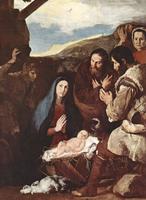
Adoration of the Shepherds
Jusepe de Ribera
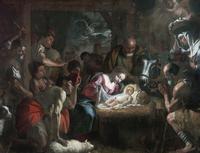
Adoration of the Shepherds
Mattia Preti
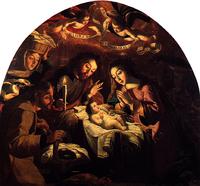
Nativity of Jesus
Josefa de Obidos
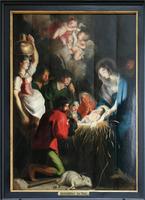
The Birth of Jesus
Cornelis de Vos
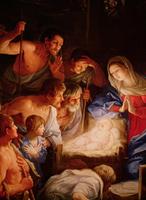
Adoration of the Shepherds
Guido Reni
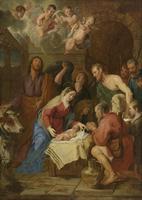
The Adoration of the Shepherds
Gaspar de Crayer
Adoration of the Magi
Charles-Andre van Loo (Carle van Loo)
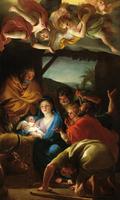
The Adoration of the Shepherds
Anton Raphael Mengs
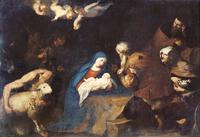
Adoration of the Shepherds
Jusepe de Ribera
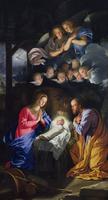
Nativity
Philippe de Champaigne
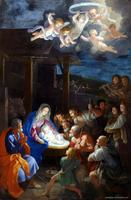
Adoration of the Shepherds
Guido Reni
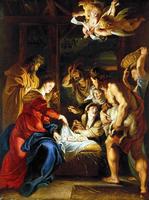
Adoration of the Shepherds
Peter Paul Rubens
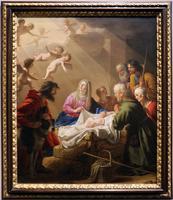
Adoration of the Shepherds
Gerard van Honthorst
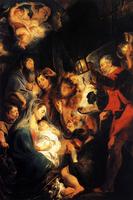
Adoration of the Shepherds
Jacob Jordaens
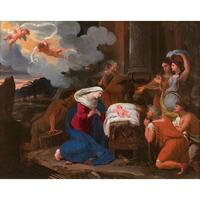
Adoration des bergers
Thomas Blanchet

Adoration of the Magi
Bartolome Esteban Murillo
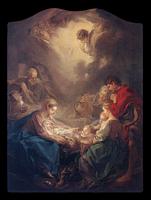
The Light of the World
Francois Boucher