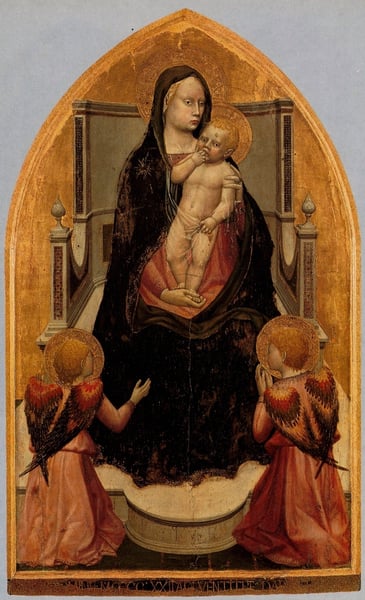
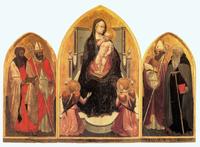
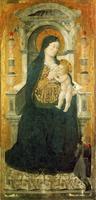
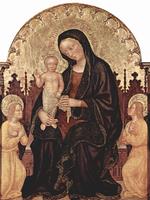
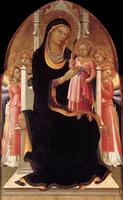
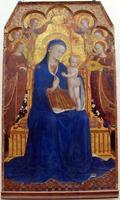
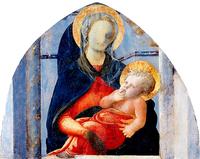
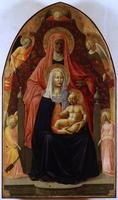
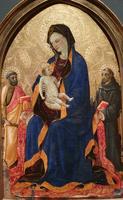
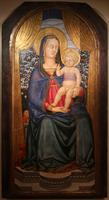
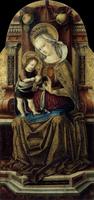
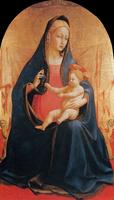
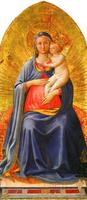
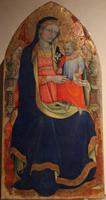
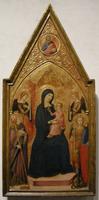
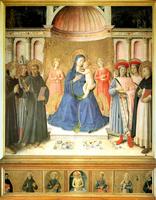
The San Giovenale Triptych (Central panel) by Masaccio is a foundational work of the Early Renaissance, significant for its decisive break from Gothic conventions within the religious painting genre. Masaccio’s treatment of the central panel—likely the Virgin and Child enthroned—demonstrates a revolutionary commitment to naturalism and volumetric form. Unlike the flat, decorative figures of the International Gothic style, Masaccio uses chiaroscuro (strong contrasts of light and shadow) to model solid, weighty bodies that occupy a convincing, measurable space. This early altarpiece (c. 1422) establishes the artist’s mastery of linear perspective and foreshortening, principles that would define the Early Renaissance. The panel’s monumental simplicity and humanized sacred figures imbue the devotional scene with a new emotional gravity and spatial coherence, marking a critical step toward the Renaissance ideal of art that mirrors observed reality.