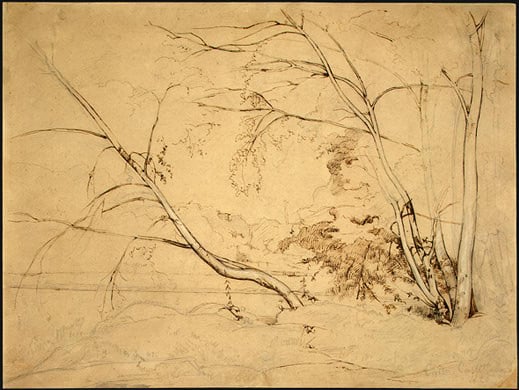
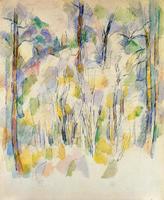
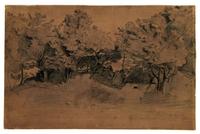
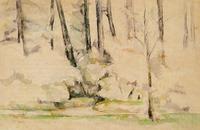
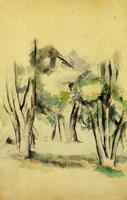
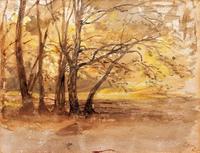
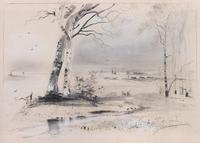
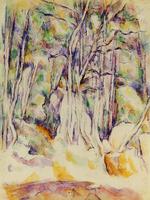
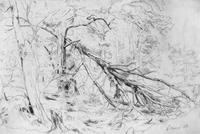
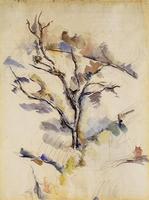
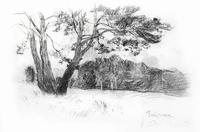
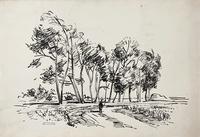
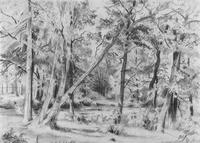
This artwork is significant as a transitional piece that bridges the classical landscape tradition of Nicolas Poussin with the emerging tenets of Realism. Executed as a sketch and study, Corot’s “The Promenade du Poussin (Roman Campagna)” captures a direct, unidealized view of the Italian countryside, prioritizing atmospheric light and subtle tonal shifts over the structured, heroic composition favored by Poussin. Within the Realist movement, this work exemplifies the shift toward plein-air observation and the documentation of everyday rural life—here, a simple, meditative walk through the Campagna rather than a mythological allegory. The painting’s loose, rapid handling, soft transitions between earth and sky, and muted palette reveal Corot’s focus on capturing the transient effects of light and weather. This approach not only foreshadows Impressionism but also demonstrates how Realism could elevate a modest study to a finished, contemplative scene, marking a deliberate departure from academic finish in favor of authentic perception.