Expert analysis of Camille Corot’s Pastorale
Style: Realism · Genre: landscape
Expert Art Historical Analysis: "Pastorale" by Camille Corot
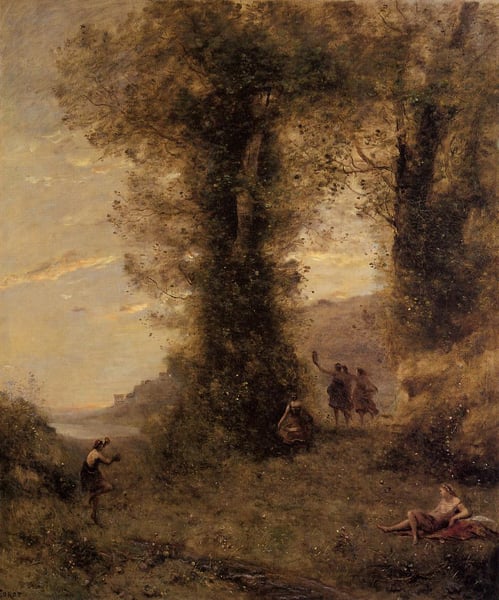
Camille Corot’s "Pastorale" stands as a quintessential example of the transition from Neoclassical idealism to the emerging Realist sensibility in 19th-century French landscape painting. Though rooted in the Realist style, Corot’s approach is deeply personal, blending acute observation of nature with a soft, poetic atmosphere that anticipates Impressionism.
Significance within Realism and its Period:
-
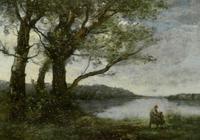
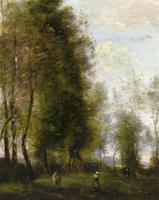
Bridging Classical and Modern: Corot is often considered a bridge between the structured, heroic landscapes of the past (Poussin, Claude Lorrain) and the plein-air naturalism of the Barbizon School and later Impressionists. In “Pastorale,” the composition retains a classical balance—a serene vista, a foreground with figures or trees—but the execution is grounded in direct observation. The muted greens, grays, and browns, and the diffused, silvery light reflect Corot’s commitment to capturing the actual atmosphere of the French countryside, not an idealized Arcadia.
-
Atmospheric Realism: Corot’s signature “silvery” tonalism is on display. He layers thin, diaphanous washes of paint to create a shimmering, unified tone that conveys the fleeting quality of early morning or late afternoon light. This handling makes the landscape feel both tangible and dreamlike—a hallmark of Corot’s mature style. Unlike the sharp contours of Neoclassicism, forms in “Pastorale” are softened, blending into the atmosphere, emphasizing that realism for Corot was as much about mood and light as about factual depiction.
-
Influence on Later Movements: While categorized as Realism, “Pastorale” pushes beyond strict documentation. Corot’s focus on tonal harmony, the subtle brushwork, and the integration of figures into a living landscape directly inspired the Barbizon painters (e.g., Daubigny, Rousseau) and, most notably, the Impressionists. Monet and Pissarro cited Corot’s ability to capture the “envelope” of light and air as a foundational influence.
What Makes This Work Significant:
“Pastorale” is significant because it demonstrates how Corot transformed landscape painting from a backdrop for history or mythology into an independent genre capable of conveying a profound, meditative experience of nature. It embodies a lyrical realism—faithful to the site yet infused with a gentle, elegiac poetry. This work, like Corot’s best, shows that Realism need not be merely documentary; it can be contemplative, atmospheric, and deeply personal, paving the way for modern landscape painting.
Museum / Gallery
Visually similar
20 works with related composition and palette
The Piper at Lake Albano
Camille Corot
The Happy Isle
Camille Corot
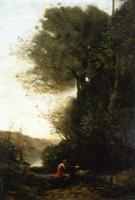
Goatherd Charming His Goat with a Flute
Camille Corot
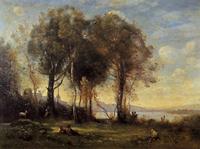
The Goatherds of Castel Gandolfo
Camille Corot
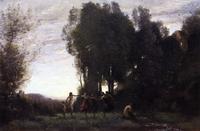
Circle of Nymphs, Morning
Camille Corot
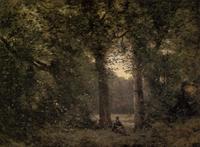
Souvenir of Ville d'Avray
Camille Corot
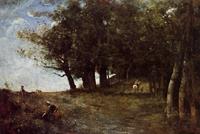
The Forestry Workers
Camille Corot
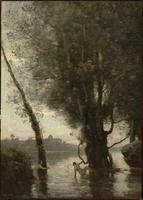
Bathers of the Borromean Isles
Camille Corot
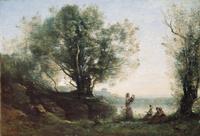
Orpheus Lamenting Eurydice
Camille Corot
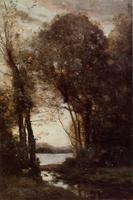
Goatherd Standing, Playing the Flute under the Trees
Camille Corot
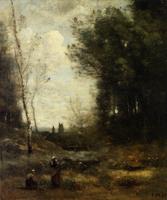
The Valley
Camille Corot
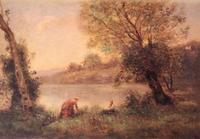
Peasant from Ville d'Avray and her Child among Two Trees at the Bank of a Pond
Camille Corot
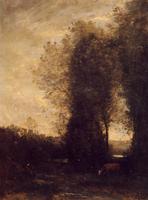
A Cow and its Keeper
Camille Corot
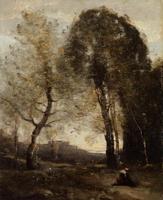
Souvenir of Italy
Camille Corot
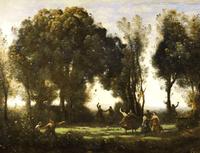
Morning: Dance of the Nymphs
Camille Corot
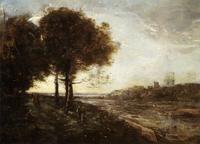
Waterfall on the Romagnes
Camille Corot
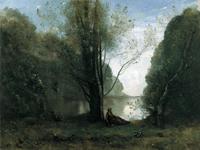
The Solitude. Recollection of Vigen, Limousin
Camille Corot
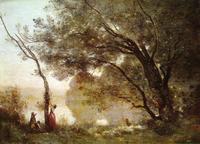
Recollections of Mortefontaine
Camille Corot
Three Trees with a View of the Lake
Camille Corot
A Shady Resting Place
Camille Corot