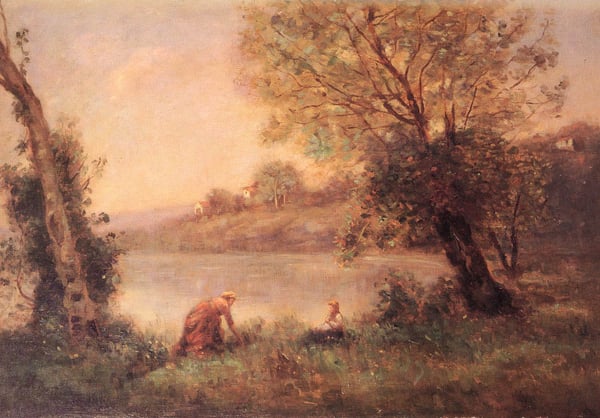
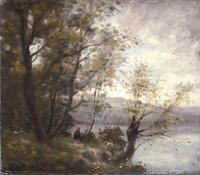
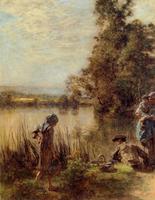
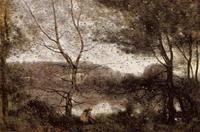
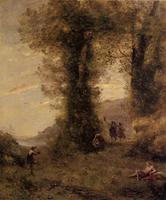
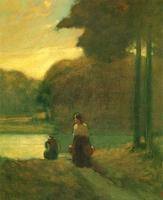
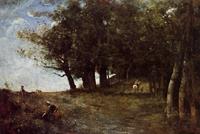
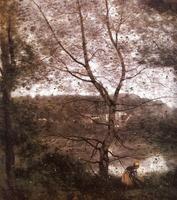
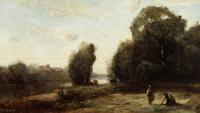
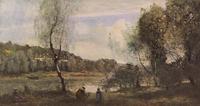
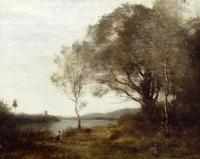
Camille Corot’s Peasant from Ville d’Avray and her Child among Two Trees at the Bank of a Pond is a quintessential Realist landscape that achieves significance through its integration of humble rural life with a natural setting. The work’s title itself establishes the importance of the ordinary: a peasant woman and her child are not incidental staffage but central subjects, placed between two trees at the water’s edge. Within the Realist tradition, Corot elevates the mundane—a pond bank, a mother and child in daily activity—to the level of serious art, rejecting idealized or heroic themes. The composition, with the figures framed by distinctive trees and mirrored in the pond, emphasizes a direct, unembellished observation of the Ville d’Avray countryside. This approach captures the quiet dignity of rural existence and the transient effects of light and atmosphere on the landscape, hallmarks of Corot’s pioneering role in moving landscape painting toward a more truthful, naturalistic representation. The work thus stands as a key example of how Realism transformed landscape genre from backdrop to a vehicle for exploring the authentic relationship between people and their environment.