Analisi esperta di A Windmill at Montmartre di Camille Corot
Stile: Realism · Genere: landscape
Expert Analysis: "A Windmill at Montmartre" by Camille Corot
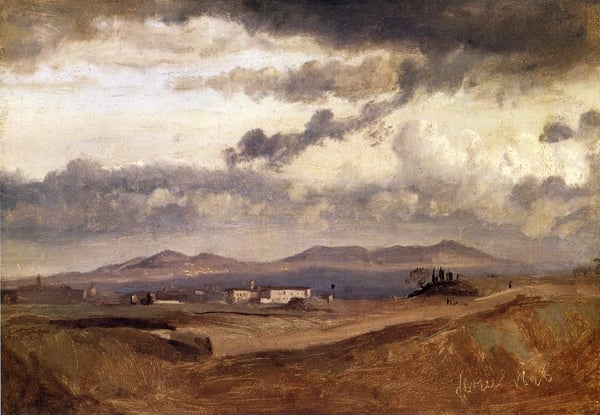
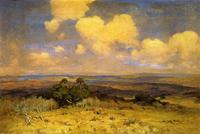
Camille Corot’s A Windmill at Montmartre is a quintessential example of Realist landscape painting, executed with a quiet yet profound fidelity to the natural world. Created before Montmartre’s transformation into the iconic bohemian quarter of Paris, the work captures a rural, agrarian scene that was already disappearing—a hallmark of Realism’s commitment to depicting contemporary life without idealization.
What makes this work significant:
-
Realist Truth to Place – Corot rejects the grandiose, mythological landscapes of Romanticism. Instead, he presents a humble windmill, a weathered structure that stands as a literal and symbolic marker of work and daily existence. The painting’s strength lies in its unvarnished portrayal of the land, with subdued browns, greens, and grays that mirror the actual terrain of the 19th-century countryside.
-
Atmospheric Precision – Within the Realist style, Corot excels at capturing specific light and weather. The soft, diffused sky and the gentle shadowing across the hill suggest a particular time of day—likely late afternoon—and a calm, overcast atmosphere. This meteorological honesty was revolutionary, shifting landscape art from invented scenes to observed moments.
-
Transitional Bridging – While firmly rooted in Realism, Corot’s loose brushwork and sensitive handling of light anticipate Impressionism. He focuses on the sensation of the scene rather than minute detail, yet he never sacrifices the solid, physical presence of the windmill or the earthy foreground. This balance makes the work a key pivot between the Barbizon School and the later Parisian avant-garde.
-
Historical Documentation – The windmill at Montmartre was more than a picturesque motif; it was a functional structure in a working-class agricultural community. Corot’s realist lens preserves a moment before the hill’s urbanization, offering a critical historical record of a landscape on the cusp of change.
In sum, A Windmill at Montmartre exemplifies Realism’s core ethos: to look directly at the world, find beauty in the ordinary, and render it with truthfulness. Corot’s ability to merge atmospheric subtlety with unadorned subject matter ensures this painting’s enduring significance as a masterwork of landscape realism.
Museum / Gallery
Visivamente simili
20 opere con composizione e palette affini
Landscape by the Lake
Camille Corot
The Roman Cammagna, with the Tiber
Camille Corot
Landscape
John Henry Twachtman
Irish Landscape
Richard Jack
Shoreham Bay near Brighton
John Constable
Landscape at Sunset
Alexandre-Gabriel Decamps
Gathering Clouds
Benjamin Brown
The Roman Campagna with the Claudian Aqueduct
Camille Corot
View of mountains, Auvergne
Theodore Rousseau
The March Wind
Robert Henri
Tuscan Landscape
John Henry Twachtman
Fields with a Village on the Horizon, Two Figures in the Foreground
Camille Corot
The valley of Bièvre near Paris
Theodore Rousseau

Volga
Aleksey Savrasov
Landscape of Xàtiva
Alejandro Cabeza
Spain
Robert Henri
View near Duddingston Loch
David Allan
Wooded Plateau, Fountainebleau
Camille Corot
Autumn Morning
Janos Tornyai
Sunlight and Shadow
Robert Julian Onderdonk