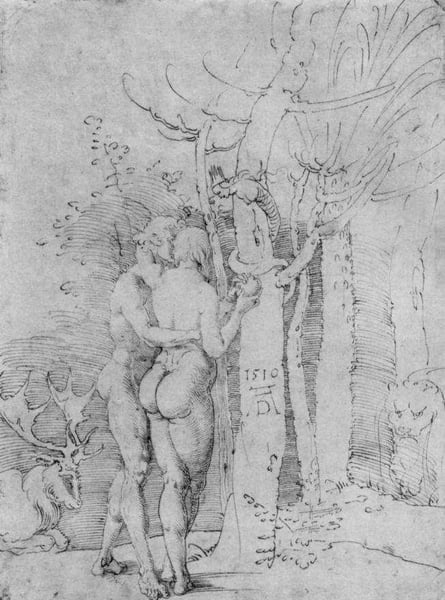
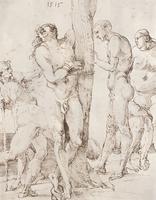
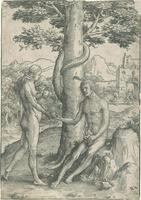
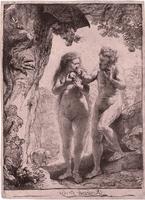
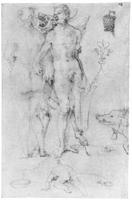
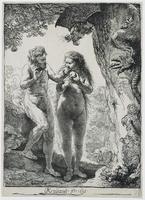
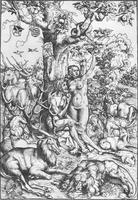
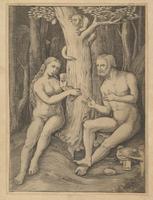
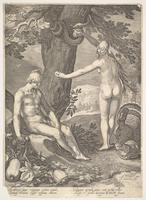
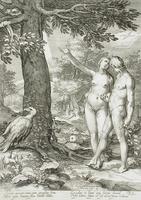
As a Northern Renaissance religious painting, Albrecht Dürer's Adam and Eve is significant for its groundbreaking synthesis of Italian Renaissance humanism with the meticulous naturalism of Northern European art. Executed at a time when Dürer was deeply influenced by his travels to Italy, the work represents one of the first instances in German painting where classical ideals of proportion and anatomy are applied to a biblical subject—best exemplified in the idealized, life-sized figures of Adam and Eve. At the same time, the painting retains distinctly Northern characteristics: a hyper-detailed, almost botanical rendering of the forest setting, symbolic flora and fauna (such as the cat, mouse, elk, and parrot), and a dense, symbolic narrative layer that ties the Fall of Man to the broader Christian theme of original sin and redemption. This fusion of Italianate figural grace with Northern precision and moral didacticism marks a pivotal moment in the Northern Renaissance, elevating Dürer’s work as a touchstone for the integration of classical humanism into German religious art.