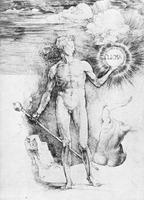
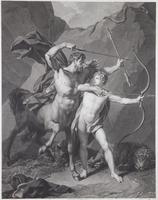
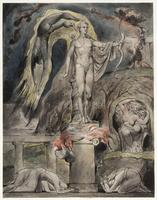
Expert Analysis: "Apollo" by Albrecht Dürer
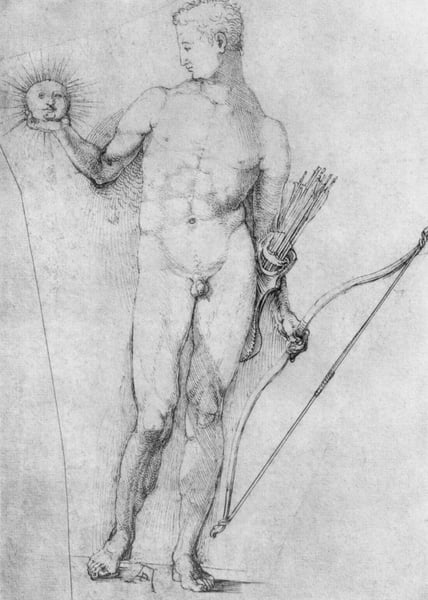
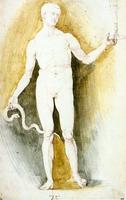
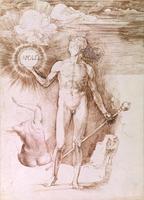
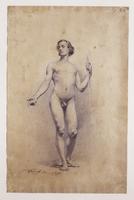
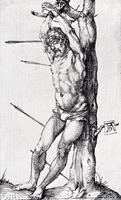
As a work of the Northern Renaissance in the mythological painting genre, Dürer's Apollo stands as a significant bridge between two worlds. The Northern Renaissance is characterized by meticulous detail, vibrant naturalism, and a symbolic, often moralizing undercurrent. By choosing a classical mythological subject—Apollo, the Greek god of arts, music, and light—Dürer applies this Northern precision to a theme more typical of the Italian Renaissance.
What makes the piece noteworthy is its synthesis: the mythological ideal of divine beauty is rendered with the Northern Renaissance artist's acute observation of texture, anatomy, and light. Dürer does not merely copy an Italianate Apollo; he imbues the figure with a tangible, almost portrait-like presence, grounding a classical deity in the tangible, detail-rich world of Northern Europe. This reflects the Northern Renaissance's unique contribution: the fusion of humanist classical themes with a devotion to empirical, earthly naturalism. The work thus exemplifies how Northern artists reimagined ancient myths not as distant allegories, but as vivid, believable figures, marking an important moment in the cross-cultural exchange of Renaissance ideas.