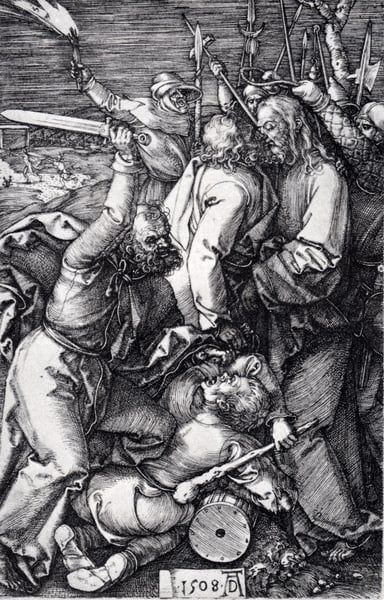
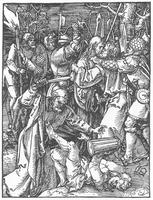
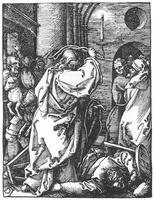
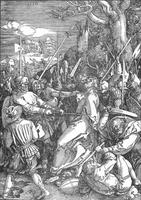
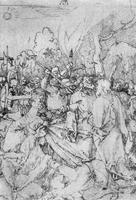
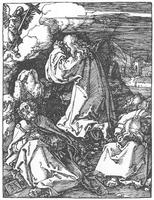
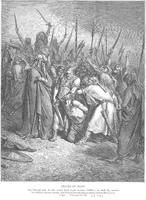
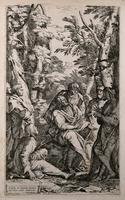
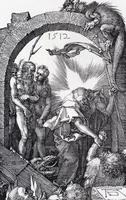
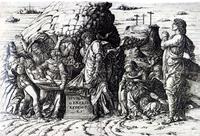
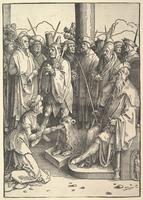
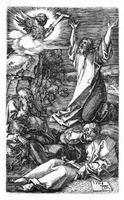
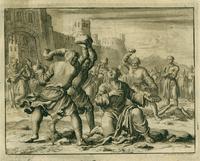
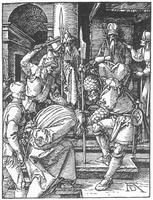
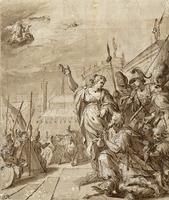
In Albrecht Dürer's Betrayal of Christ, the artist’s Northern Renaissance sensibility transforms a familiar biblical narrative into a scene of acute psychological tension and meticulous naturalism. The composition centers on the moment of Judas’s kiss, but Dürer amplifies the drama through stark contrasts of light and shadow—a hallmark of his graphic work—that heighten the chaotic nighttime arrest. Every figure, from the stern face of Christ to the bared teeth of Peter cutting off Malchus’s ear, is rendered with the precise, almost sculptural detail characteristic of Northern European art. This emphasis on individual expression and textured surfaces (armor, flowing robes, gnarled tree branches) grounds the sacred event in a tangible, human reality. What makes the work significant within its period is Dürer’s ability to merge late-Gothic emotional intensity with the new Renaissance interest in perspective and anatomical accuracy. The result is not merely a devotional image but a masterful demonstration of printmaking technique—likely an engraving or woodcut—that would influence generations of artists by elevating religious narrative to a sophisticated study of character, light, and material substance.