
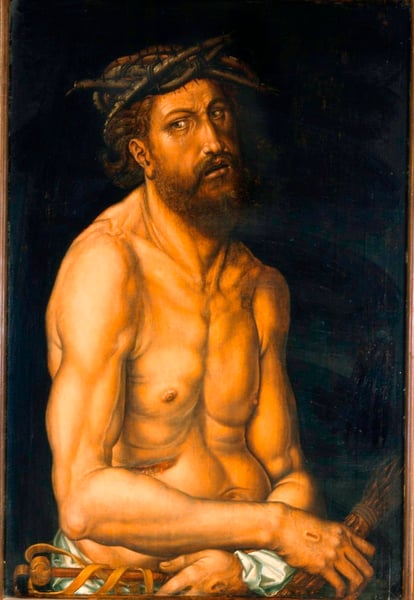
Expertenanalyse zu Albrecht Durers Ecce Homo
Stil: Northern Renaissance · Genre: religious painting
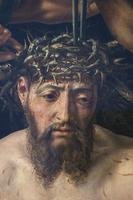
Albrecht Dürer’s Ecce Homo is a masterful example of Northern Renaissance religious painting. The work’s significance lies in how it synthesizes the era’s defining traits—meticulous naturalism, emotional intensity, and profound theological introspection—into a single, iconic moment. As a Northern Renaissance piece, it rejects idealized medieval forms in favor of acutely observed human detail: the texture of skin, the weight of fabric, and the subtle play of light and shadow that heighten the scene’s palpable sorrow. The genre—religious painting—is here transformed by Dürer’s ability to make the sacred intimately human, focusing on Christ’s vulnerability and the psychological weight of his public humiliation. This approach not only reflects the Northern Renaissance’s emphasis on personal devotion and verisimilitude but also solidifies Dürer’s role in elevating the religious narrative from mere illustration to a profound meditation on suffering and empathy.
Visuell ähnlich
20 Werke mit ähnlicher Komposition und Farbpalette
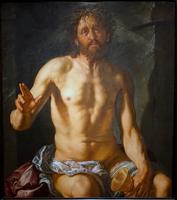
Man of Sorrows with a Chalice (Christ as Redeemer)
Hendrick Goltzius
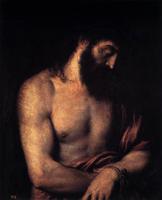
Ecce Homo
Titian
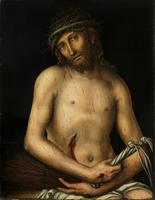
Chtist as the Man of Sorrows
Lucas Cranach the Elder
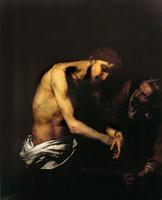
Flagellation of Christ
Jusepe de Ribera
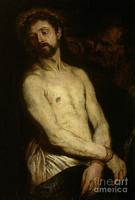
Man of Sorrows, Ecce Homo
Anthony van Dyck
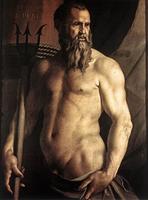
Portrait of Andrea Doria as Neptune
Agnolo Bronzino
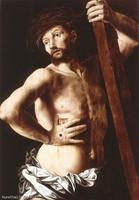
Christ
Jan van Hemessen
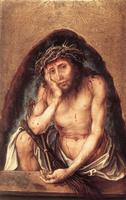
Christ as the Man of Sorrows
Albrecht Durer
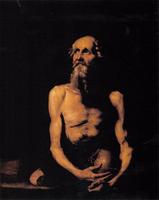
St. Paul the Hermit
Jusepe de Ribera
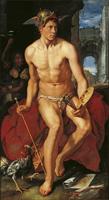
Mercury
Hendrick Goltzius
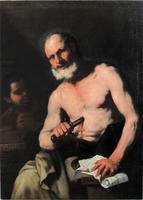
Caton
Luca Giordano
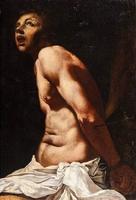
Saint Sebastian
Caravaggio
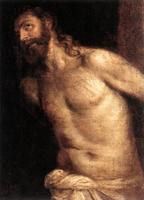
The Scourging of Christ
Titian
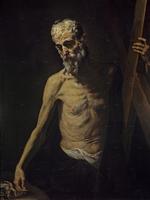
St. Andrew
Jusepe de Ribera
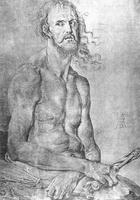
Self-Portrait as the Man of Sorrows
Albrecht Durer
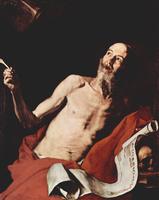
St. Jerome and the Trumpet of Doom
Jusepe de Ribera
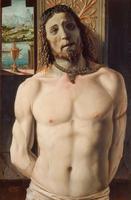
Christ at the Column
Donato Bramante
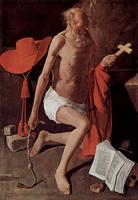
Repenting of St. Jerome, also called St. Jerome with Cardinal Hat
Georges de la Tour
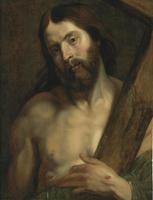
Christ with the Cross
Anthony van Dyck
Jesus Christ crowned with thorns
Maerten van Heemskerck