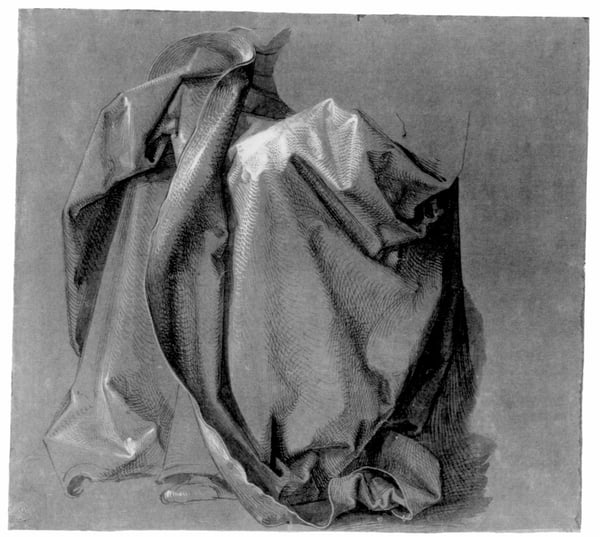
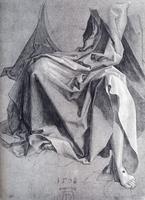
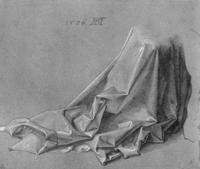
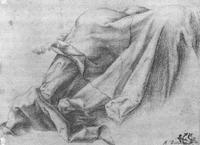
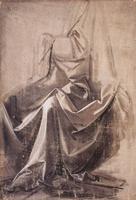
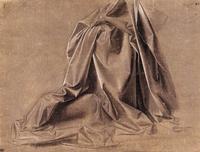
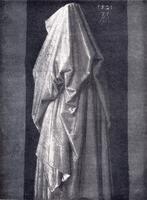
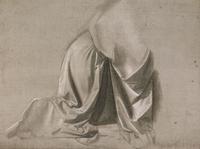
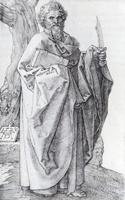
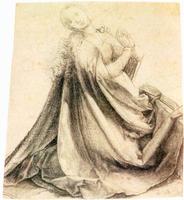
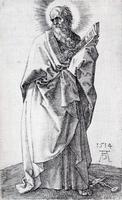
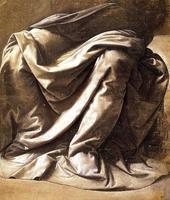
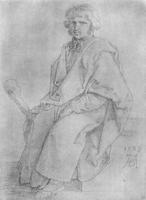
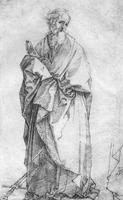
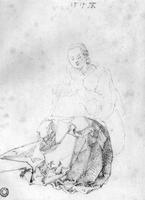
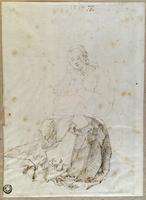
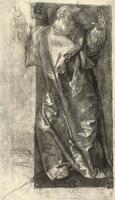
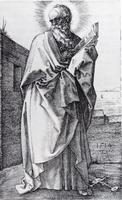
This preparatory sketch, attributed to Albrecht Dürer as a study for a larger religious composition, exemplifies the Northern Renaissance fascination with meticulous naturalism and symbolic detail. As a sketch and study, it is significant for demonstrating Dürer’s unparalleled draftsmanship—the ability to render the heavy, voluminous folds of a divine robe through precise hatching and cross-hatching, creating a sense of tangible weight and texture. This focus on fabric and drapery was not mere decoration; in Northern Renaissance art, the handling of cloth often conveyed the sacred nature of the wearer, with complex folds symbolizing divine majesty and the infinite. Dürer, deeply influenced by Italian perspective and proportion yet rooted in Northern Gothic precision, uses this study to explore how light and shadow define form, a key innovation of the period. The work is significant as a rare glimpse into his creative process, showing how a master of the Northern Renaissance prepared for altarpiece figures (such as God the Father) by emphasizing material reality as a vehicle for spiritual expression.