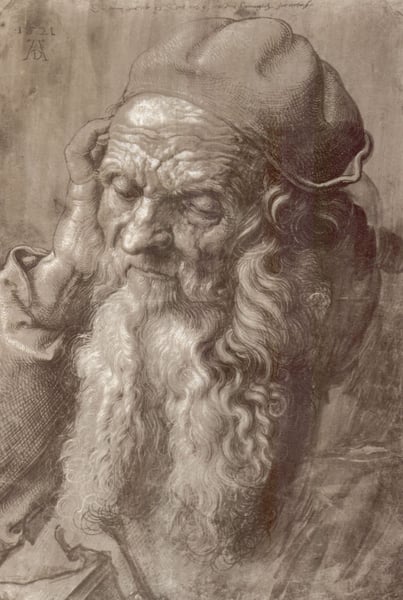
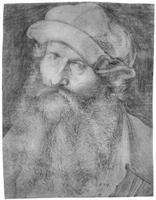
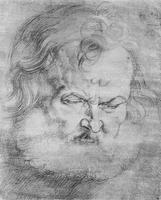
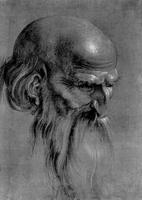
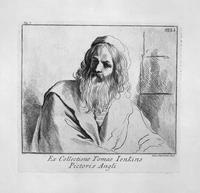
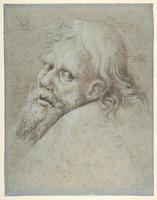
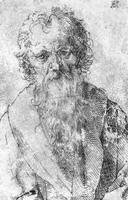
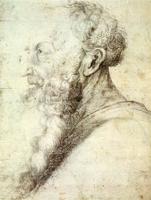
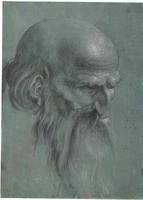
Albrecht Dürer’s Man Aged 93 (brush & ink on paper) stands as a striking testament to the Northern Renaissance’s obsession with empirical observation and the honest portrayal of human mortality. Executed in brush and ink—a medium that demands swift, confident handling—this portrait is remarkable for its unflinching realism. Every furrow, vein, and sag of aged skin is rendered with the meticulous precision that Dürer perfected, transforming a simple study of an elderly man into a profound meditation on the passage of time.
What makes this work significant is its humanistic depth. At a time when portraiture often idealized its subjects or imbued them with symbolic attributes, Dürer instead isolates the raw physicality of extreme old age. The subject’s 93 years are not softened or allegorized; they are presented as a landscape of experience. This approach exemplifies the Northern Renaissance’s shift from medieval typology to individual characterization, with Dürer’s virtuoso linework capturing not just the appearance but the weathered dignity of a life fully lived. The choice of a non-aristocratic sitter—an unnamed old man, likely a study for its own sake—underscores Dürer’s belief that even the humble and decrepit hold a universal, timeless significance.