Expertenanalyse zu Albrecht Durers Muse Calliope
Stil: Northern Renaissance · Genre: mythological painting
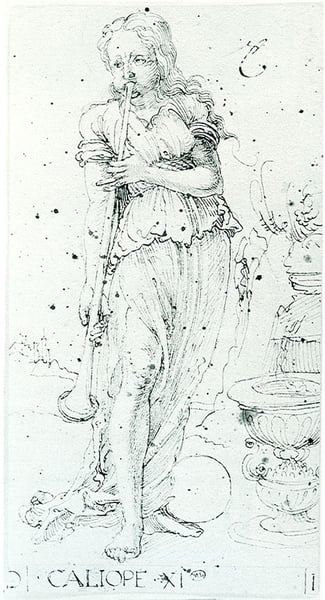
Expert Analysis of "Muse Calliope" by Albrecht Dürer
Albrecht Dürer’s Muse Calliope stands as a compelling example of the Northern Renaissance’s engagement with classical mythology. As the muse of epic poetry, Calliope embodies the era’s growing humanist interest in ancient Greco-Roman culture, a theme Dürer helped introduce to Northern European art.
Significance within the Northern Renaissance
Dürer, a master of the Northern Renaissance, fused the meticulous observational detail typical of Flemish tradition with the idealized forms and spatial clarity inspired by Italian Renaissance art. In Muse Calliope, this synthesis is evident: the figure likely combines naturalistic textures (such as fabric, hair, and skin) with a balanced composition that lifts a mythological subject from mere decoration to a serious intellectual statement.
Genre and Interpretation
As a mythological painting, the work represents a shift in Northern art from exclusively religious themes to secular, literary subjects. Calliope’s presence signals Dürer’s engagement with humanist circles and his desire to elevate the status of the artist from craftsman to learned intellectual. The choice of a classical muse also reflects the period’s fascination with ancient sources as a wellspring of wisdom and artistic authority.
Why It Matters
Muse Calliope is significant because it marks Dürer’s contribution to the diffusion of Renaissance humanism north of the Alps. By rendering a figure from classical mythology with the precision and depth characteristic of the Northern Renaissance, Dürer helped legitimize mythological painting as a worthy and profound genre in Germany and beyond. The work underscores how Northern artists reinterpreted classical ideals through their own meticulous lens, creating a distinct and influential artistic dialogue between North and South.
Museum / Gallery
Visuell ähnlich
20 Werke mit ähnlicher Komposition und Farbpalette
Engraving on copper of a Foolish Virgin
Martin Schongauer
Danae in the Brazen Chamber
Frederick Sandys
One of the wise virgins
Albrecht Durer
Four Muses
Andrea Mantegna
The Second Wise Virgin
Martin Schongauer
Frontispiece with winged woman
Luc-Olivier Merson
St. Agatha, from the episode "Holy Women"
Agostino Carracci
Prudentia
Albrecht Durer
Angel Holding the Crown of Thorns
Bartolome Esteban Murillo
Pallas
Sandro Botticelli
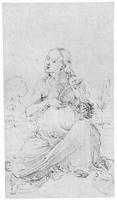
Drawing from the "Tarot" The Muse Thalia
Albrecht Durer
Angel with the instruments of whipping
Bartolome Esteban Murillo
Study
Domenico Ghirlandaio
Bacchante leading ears; beside her the Sun
Giovanni Battista Piranesi
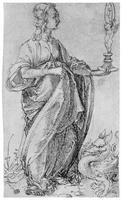
Drawing from the "Tarot" Prudence
Albrecht Durer
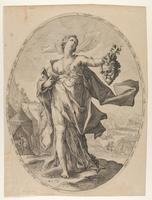
Judith
Hendrick Goltzius
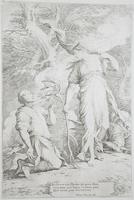
Ceres and Phytalus
Salvator Rosa
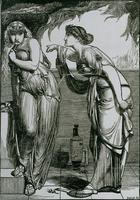
Helen and Cassandra
Frederick Sandys
Angel holding registration
Bartolome Esteban Murillo
Jahel
Hendrick Goltzius