Pages Of Marginal Drawings For Emperor Maximilian`s Prayer Book
Dettagli
Analisi esperta di Pages Of Marginal Drawings For Emperor Maximilian`s Prayer Book di Albrecht Durer
Stile: Northern Renaissance · Genere: miniature
Expert Analysis: Albrecht Dürer’s Pages of Marginal Drawings for Emperor Maximilian’s Prayer Book
Style & Period Context
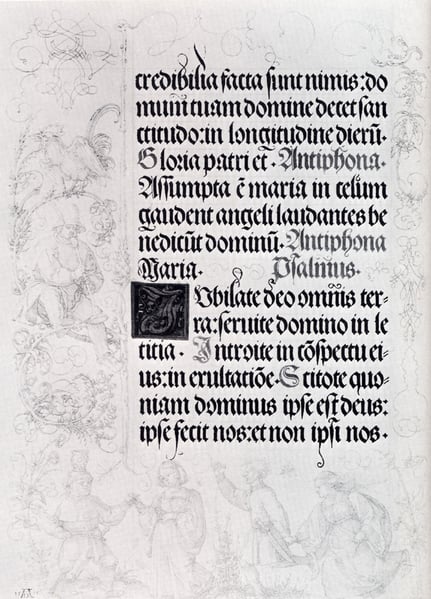
Albrecht Dürer, the preeminent master of the Northern Renaissance, produced these marginal drawings in 1515 for a printed prayer book commissioned by Holy Roman Emperor Maximilian I. The work exemplifies the Northern Renaissance’s signature synthesis of meticulous naturalism, symbolic complexity, and the fusion of religious devotion with humanist curiosity. As a set of miniature marginalia, it transforms the traditional boundaries of manuscript illumination, elevating the page margin from mere decoration to a dynamic, intimate dialogue between text and image.
Significance Within the Genre
Dürer’s contribution to the Prayer Book of Maximilian is a landmark in the evolution of European book illumination. While the genre of the miniature typically involves small-scale, highly detailed paintings within initials or borders, Dürer reimagined the margin as a free, improvisational space. Using pen and ink rather than full polychrome, he created over forty inventive vignettes—animals, cherubs, grotesques, and allegorical figures—that respond playfully to the printed text. This approach anticipates the “doodle” as a serious artistic form, showcasing Dürer’s unrivaled draftsmanship and ability to wring maximum expression from minimal means.
What Makes It Remarkable
- Fusion of Sacred and Secular: Unlike conventional prayer book illustrations that adhere strictly to devotional imagery, Dürer’s margins include whimsical secular motifs: a monkey holding a mirror, a bagpiper, a snail, and hybrid creatures. These elements reflect the Northern Renaissance fascination with empirical observation of nature and the classical idea of ut pictura poesis (“as is painting, so is poetry”), blending piety with a playful, almost irreverent humanism.
- Technical Virtuosity: Executed entirely in brown ink and wash, the drawings display Dürer’s supreme control of line weight, hatching, and spatial illusion. Each miniature is a masterclass in economy of detail—a few strokes conjure fur, feathers, or the texture of bark. This spare technique was revolutionary for the period, when illuminated manuscripts were typically lavishly colored.
- Collaborative Innovation: Dürer worked alongside other artists (including Hans Baldung Grien), yet his contributions stand out for their coherent, personal voice. The drawings are among the first printed books to incorporate hand-drawn marginalia by a famous artist, blurring the line between mass-produced book and unique, bespoke object.
- Imperial Patronage and Propaganda: Maximilian I, a fervent patron of the arts, used the prayer book to project his image as a Renaissance prince. Dürer’s marginalia often include imperial symbols—eagles, lions, and heraldic devices—subtly reinforcing the emperor’s authority while celebrating the artist’s own creative license.
Conclusion
Dürer’s Pages of Marginal Drawings is a testament to the Northern Renaissance’s spirit of experimentation and the elevation of the artist as a distinct, intellectual creator. By taking the lowly margin—a space typically reserved for standard ornament—and filling it with observational wit, allegorical depth, and breathtaking technique, Dürer expanded the possibilities of the miniature genre. These drawings remain a cherished example of how sacred text and secular artistry can coexist, offering a window into the restless, inquisitive mind of one of history’s greatest draftsmen.
Museum / Gallery
Visivamente simili
20 opere con composizione e palette affini
Pages Of Marginal Drawings For Emperor Maximilian`s Prayer Book
Albrecht Durer
Prayer of David
Limbourg brothers
Saint Matthew
Limbourg brothers
God Reigns Over All the Earth
Limbourg brothers
Decorated initial "D"
Claricia
Folly at the Lectern
Hans Holbein the Younger
Decorated initial "B"
Claricia
The Pope and His Cardinals
Limbourg brothers
David Foresee the Coming of Christ
Limbourg brothers
Psalm LVI
Limbourg brothers
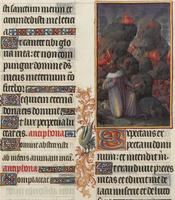
Psalm XXXIX
Limbourg brothers
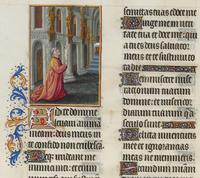
Psalm XXIV
Limbourg brothers
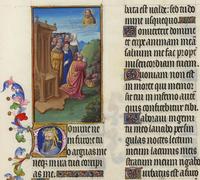
Psalm VI
Limbourg brothers
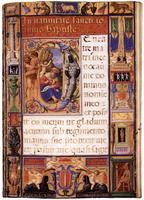
Page from the Colonna Missale
Giulio Clovio
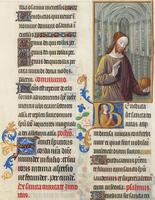
Christ Blessing the World
Limbourg brothers
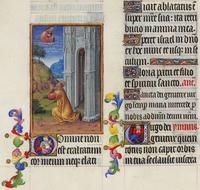
Psalm CXXX
Limbourg brothers
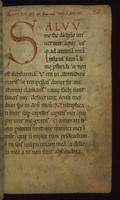
Salva me
Claricia
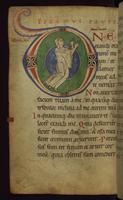
Historiated initial "D" with Orant
Claricia
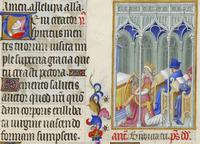
David Plays the Harp
Limbourg brothers
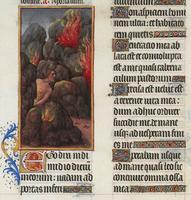
Hezekiah's Canticle
Limbourg brothers