Analisi esperta di Portrait of a man (Sebastian Brant) di Albrecht Durer
Stile: Northern Renaissance · Genere: portrait
Expert Art Historical Analysis:
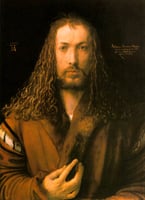
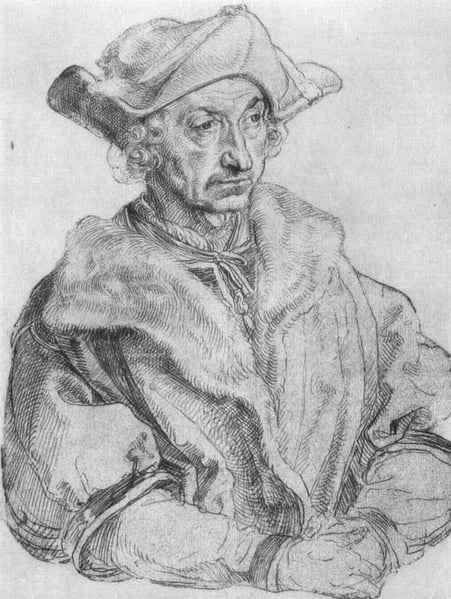
Albrecht Dürer’s Portrait of a Man (Sebastian Brant) is a masterwork of the Northern Renaissance portrait tradition. Executed in the early years of the 16th century, this painting exemplifies the era’s revolutionary shift toward individualized, psychologically penetrating likenesses. Dürer, the foremost German artist of his time, combines meticulous observation of physical detail with a profound sense of the sitter’s inner life—a hallmark of Northern Renaissance humanism.
The work’s significance lies in its synthesis of two Northern Renaissance ideals: empirical realism and intellectual dignity. Dürer renders the sitter’s features—the furrowed brow, the steady gaze, the fine strands of hair—with a precision that borders on the scientific, yet the composition transcends mere record. The direct, confrontational gaze establishes a psychological immediacy; the subject is not a distant patron but a thinking, feeling individual. This aligns with the period’s growing interest in the individual as a subject worthy of serious artistic study, a concept fueled by humanist thought.
As a portrait within the Northern Renaissance style, the painting is notable for its restrained color palette and careful modulation of light, which models the face with subtlety rather than dramatic chiaroscuro. The background is kept simple, focusing all attention on the man’s head and expression. Dürer’s handling of texture—the softness of the skin, the crisp lines of the collar—demonstrates his legendary draftsmanship, even in oil. The identity of the sitter as Sebastian Brant, a leading humanist and author of The Ship of Fools, adds a layer of intellectual context: the portrait becomes a dialogue between artist and thinker, each at the height of their powers.
Ultimately, this work is significant as a touchstone of Northern Renaissance portraiture, where the artist’s technical virtuosity serves a new, human-centered vision. Dürer not only captures a likeness but elevates the act of portrayal into a profound meditation on character and mortality, making this a cornerstone of early modern portraiture.
Visivamente simili
20 opere con composizione e palette affini
Joachim Patinir
Cornelis Cort
Portrait of Jobst Plankfelt
Albrecht Durer
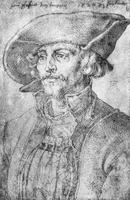
Portrait of Hans Pfaffrot of Gdansk
Albrecht Durer
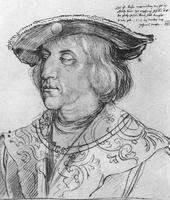
Portrait of Maximilian I
Albrecht Durer
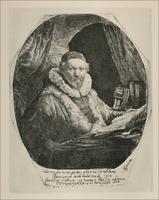
Johannes Uijtenbodaerd
Rembrandt
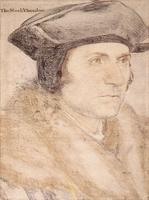
Thomas More
Hans Holbein the Younger
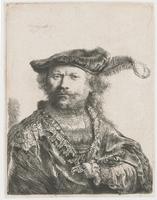
Self-portrait in velvet cap and plume
Rembrandt
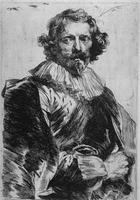
Lucas Vorsterman
Anthony van Dyck
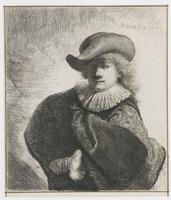
Self-portrait in a soft hat and embroidered cloak
Rembrandt
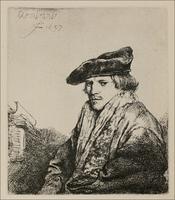
A Young Man Seated, Turned to the Left
Rembrandt
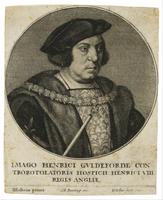
Portrait of Sir Henry Guildford, after Hans Holbein the Younger
Wenceslaus Hollar
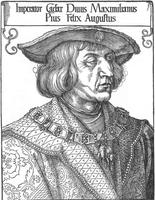
Portrait of Emperor Maximilian I
Albrecht Durer
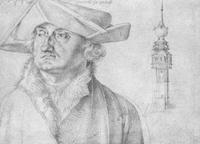
Portrait of Lazarus Ravensburger and the turrets of the court of Lier in Antwerp
Albrecht Durer
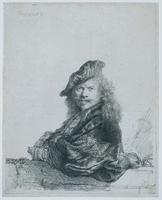
Self-portrait leaning on a stone sill
Rembrandt
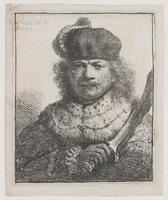
Self-portrait with raised sabre
Rembrandt
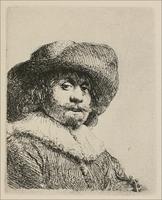
A Portrait of a Man with a Broad Brimmed Hat and a Ruff
Rembrandt
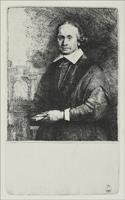
Jan Antonedis van der Linden
Rembrandt
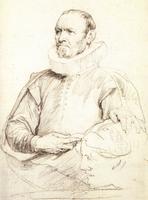
Nicolaas Rockox
Anthony van Dyck
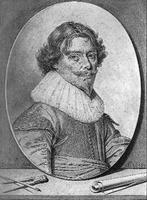
Self-portrait
David Bailly
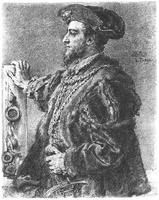
Sigismund II August
Jan Matejko