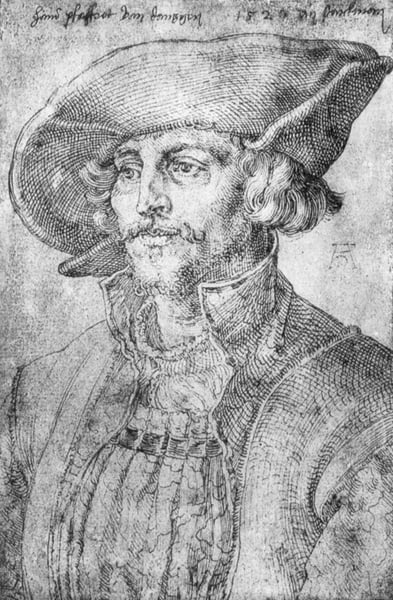
Portrait of Hans Pfaffrot of Gdansk
Expert analysis of Albrecht Durer’s Portrait of Hans Pfaffrot of Gdansk
Style: Northern Renaissance · Genre: portrait
Expert Analysis: "Portrait of Hans Pfaffrot of Gdansk" by Albrecht Dürer
Albrecht Dürer’s Portrait of Hans Pfaffrot of Gdansk exemplifies the Northern Renaissance’s revolutionary approach to portraiture, where meticulous naturalism merges with profound psychological insight. As a master of this period, Durer elevates the genre beyond mere likeness into a study of individual character and social status.
Significance within Style and Period:
- Technical Virtuosity: Dürer’s handling of detail—the texture of fur, the sheen of fabric, the precise modeling of facial features—demonstrates the Northern Renaissance obsession with observed reality. Every wrinkle and highlight is rendered with almost scientific accuracy, reflecting the era’s fusion of art and empirical inquiry.
- Psychological Depth: The sitter’s direct gaze and subtle expression invite contemplation of his inner life. Dürer avoids idealization, instead capturing a specific moment of quiet self-possession. This shift from symbolic or generic representation to individualized portrayal marks a key development in Renaissance humanism.
- Geographic and Cultural Connectivity: Identifying Hans Pfaffrot as a citizen of Gdansk (then a major Hanseatic port) places the work within a network of trade and patronage. Dürer’s portraits often served as diplomatic or mercantile statements, linking Northern European urban elites with the broader Renaissance culture.
- Harmony of Northern and Italian Ideas: While the minute detail is classically Northern, the balanced composition and volumetric form hint at Dürer’s exposure to Italian Renaissance proportion and perspective. This synthesis—a hallmark of Dürer’s legacy—made his portraits both intensely local and universally resonant.
In summary, this portrait stands as a testament to Dürer’s ability to capture the essence of a specific individual while embodying the core values of Northern Renaissance art: empirical observation, humanist dignity, and meticulous craftsmanship.
Visually similar
20 works with related composition and palette
Portrait of Maximilian I
Albrecht Durer
Portrait of a Young Man
Albrecht Durer
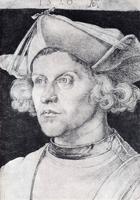
Portrait Of An Unknown Man
Albrecht Durer
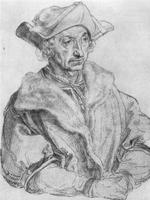
Portrait of a man (Sebastian Brant)
Albrecht Durer
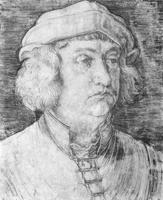
Portrait of a Man (Konrad Peutinger)
Albrecht Durer
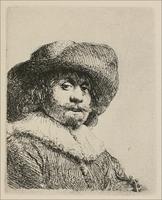
A Portrait of a Man with a Broad Brimmed Hat and a Ruff
Rembrandt
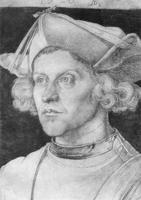
Portrait of a Young Man
Albrecht Durer
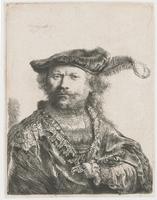
Self-portrait in velvet cap and plume
Rembrandt
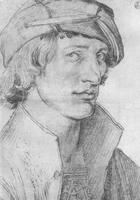
Portrait of a Young Man
Albrecht Durer
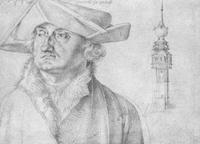
Portrait of Lazarus Ravensburger and the turrets of the court of Lier in Antwerp
Albrecht Durer
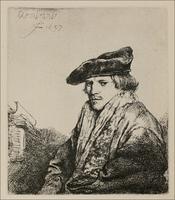
A Young Man Seated, Turned to the Left
Rembrandt
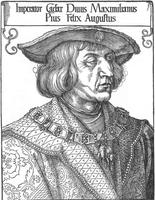
Portrait of Emperor Maximilian I
Albrecht Durer
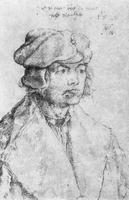
Portrait of Jobst Plankfelt
Albrecht Durer
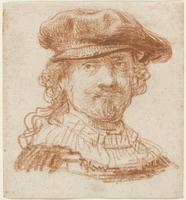
Self-portrait
Rembrandt
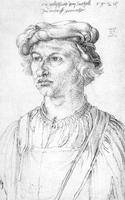
Portrait of a goldsmith from Mechelen
Albrecht Durer
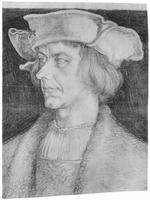
Portrait of a man (Paul Hofhaimer or Hans Tucher)
Albrecht Durer
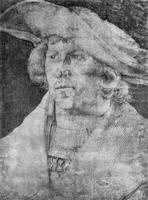
Portrait of a Man
Albrecht Durer
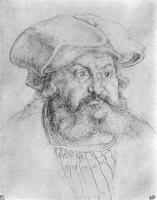
Portrait of Elector Friedrich the Wise
Albrecht Durer
Frederick The Wise, Elector Of Saxony
Albrecht Durer
Self-portrait
David Bailly