
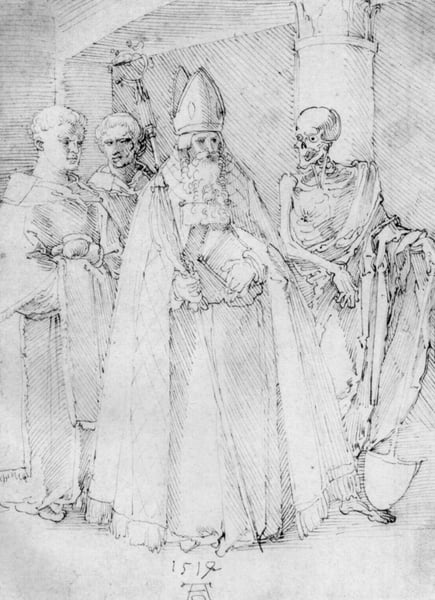
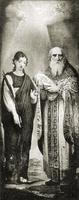
St. Fridolin
Albrecht Durer sanatçısının St. Fridolin eseri hakkında uzman analizi
Tarz: Northern Renaissance · Tür: religious painting
Expert Analysis: "St. Fridolin" by Albrecht Dürer
As a masterwork of the Northern Renaissance, Albrecht Dürer’s St. Fridolin exemplifies the period’s fusion of meticulous naturalism with profound religious devotion. Created within a tradition that prized empirical observation and symbolic detail, this painting holds significance through its demonstration of Dürer’s unparalleled technical skill and his ability to infuse a conventional religious subject with individualized, psychological depth.
Significance within the Northern Renaissance:
- Precision and Texture: True to Northern Renaissance style, Dürer renders every surface—from the saint’s flowing robes to the surrounding landscape—with extraordinary detail. The crisp lines and subtle gradations of light reveal his training as a printmaker, translating a graphic precision into oil painting that makes the figure almost tangible.
- Symbolism and Narrative: While the genre is religious painting, Dürer goes beyond mere depiction. St. Fridolin, a 6th-century Irish missionary known for founding monasteries in Alsace, is portrayed with attributes that anchor the narrative: his pilgrim’s staff, book, and possibly a church model hint at his role as a builder of faith. Such details invite the viewer to contemplate the saint’s spiritual journey and historical impact.
- Humanistic Naturalism: Unlike earlier Gothic treatments, Dürer presents the saint as a believable human presence. The calm, introspective expression and naturalistic proportions reflect the Northern Renaissance’s embrace of humanist values—making a holy figure accessible yet awe-inspiring.
Overall Significance: St. Fridolin is significant because it encapsulates Dürer’s genius at bridging the sacred and the secular. Through impeccable craftsmanship and layered symbolism, it elevates a lesser-known saint into a compelling icon of Northern Renaissance spirituality, demonstrating how art of this period used observable reality to reveal divine truth.
Görsel olarak benzer
İlişkili kompozisyon ve renk paletine sahip 20 eser
The Austrian Saints
Albrecht Durer
Mass of Cardinal Albrecht of Brandenburg in the Abbey Church Hall
Albrecht Durer
Saint Isidore
Bartolome Esteban Murillo
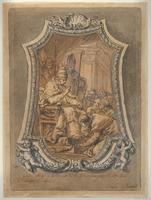
The Clergy of Rome Paying Homage to St. Gregory After His Investiture
Charles-Andre van Loo (Carle van Loo)
Philip
Albrecht Durer
St. Philip
Albrecht Durer
St. Bartholomew
Albrecht Durer
St. Paul (First State)
Albrecht Durer
St. Peter And St. John Healing The Cripple
Albrecht Durer
A Man Seated at a Table Covered with Books
Rembrandt
Peter Arbues verurtheilt eine Ketzerfamilie zum Feuertode
Wilhelm von Kaulbach
Pope Pius VII officiating at St. Peter
Jean Auguste Dominique Ingres
Saint Leander of Seville
Bartolome Esteban Murillo
The Descent of the Holy Spirit
Albrecht Durer
Bapteme
Theophile Steinlen
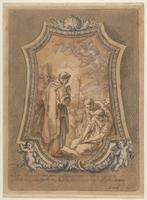
Saint Gregory as Deacon Directing Prayers and Processions for the Cessation of the Plague
Charles-Andre van Loo (Carle van Loo)
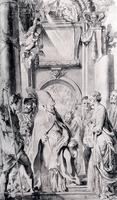
Saint Gregory with Saints Domitilla, Maurus, and Papianus
Peter Paul Rubens
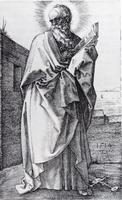
St. Paul (Second State)
Albrecht Durer
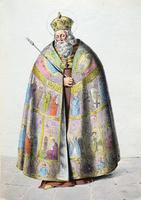
Stephan I
Josef Kriehuber
St. Juliana
Vladimir Borovikovsky