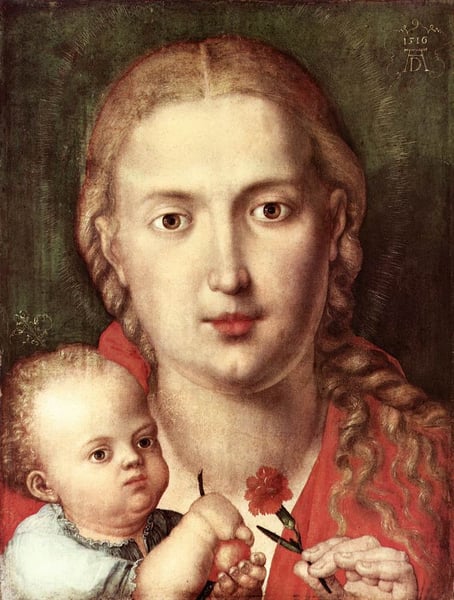
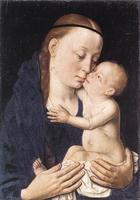
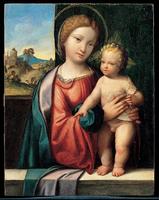
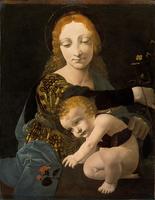
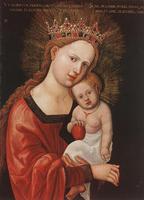
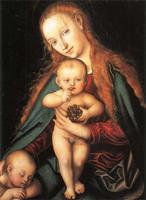
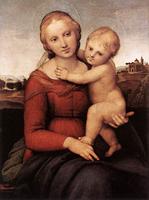
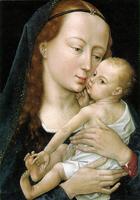
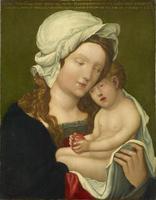
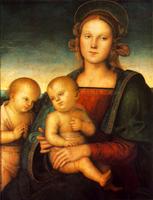
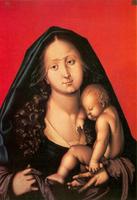
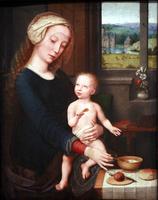
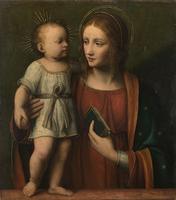
“The Madonna of the Carnation” by Albrecht Dürer is a defining religious painting of the Northern Renaissance. Within this style, the work is significant for exemplifying the Northern Renaissance’s characteristic fusion of meticulous naturalistic detail with profound spiritual symbolism—a hallmark of Dürer’s practice. As a religious subject, the painting reflects the period’s shift toward intimate, humanized depictions of sacred figures, while the inclusion of the carnation (evident in the title) functions as a symbol of the Virgin’s purity and the Passion, grounding theological meaning in observable, earthly motifs. Dürer’s precise handling of texture, light, and space also demonstrates the Northern Renaissance’s debt to Flemish oil painting tradition, yet his composition shows the influence of Italian Renaissance ideals of balance and perspective, making the work a pivotal synthesis of northern and southern European artistic currents. This painting therefore stands as a key example of how Northern Renaissance artists reimagined devotional imagery through empirical observation and refined technical mastery.