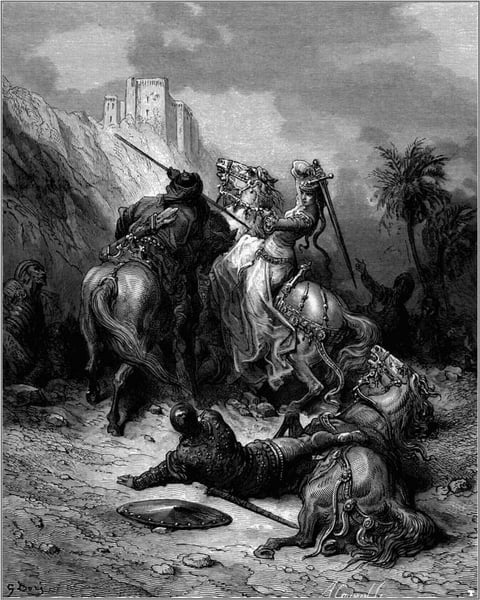
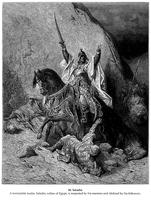
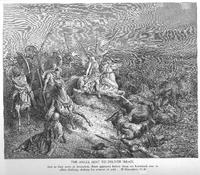
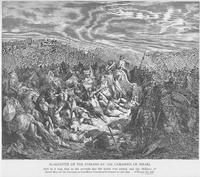
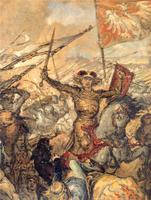
Gustave Doré’s A Heroine Florine of Burgundy exemplifies the Romantic fascination with medieval legend and dramatic storytelling, translated through the artist’s signature skill as an illustrator. While the exact source likely draws from a French fairy tale (such as Madame d’Aulnoy’s “Florine and the Blue Bird”), the work’s significance lies in how Doré elevates book illustration into a vehicle for high Romantic expression.
Within the Romantic movement, Doré stands apart for his ability to fuse theatrical chiaroscuro, intricate linework, and emotional intensity within the confines of a printed page. In this piece, the heroine Florine would typically be portrayed as both vulnerable and resolute—a common Romantic archetype of the individual confronting fate. Doré’s treatment of light and shadow, his dynamic composition, and the palpable sense of narrative tension transform a commercial illustration into a self-contained drama.
The work is significant because it demonstrates how Romanticism’s core ideals—heightened emotion, fascination with the past, and the sublime—could be democratized through widely distributed engravings. Doré’s illustrations for books reached vast audiences, making him one of the most influential visual storytellers of the 19th century. A Heroine Florine of Burgundy thus represents not only a masterful example of Romantic illustration but also a key moment in the history of print culture, where fine art and popular narrative converged.