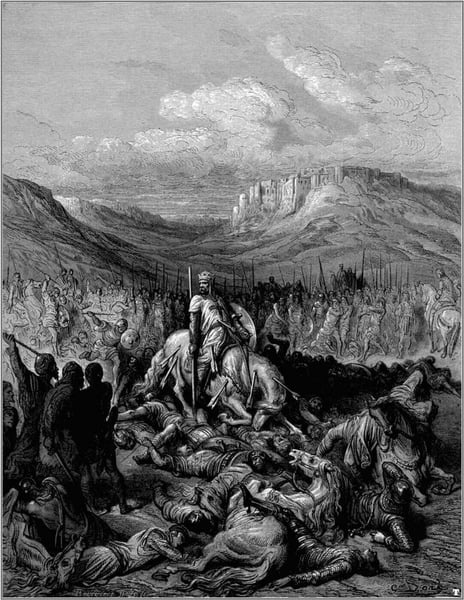
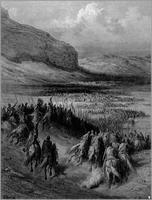
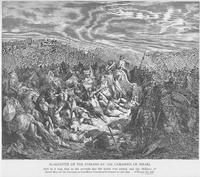
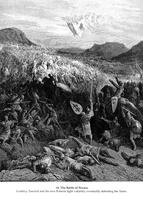
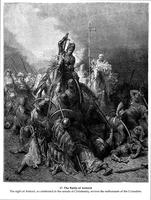
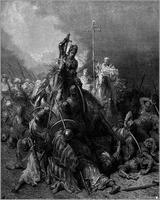
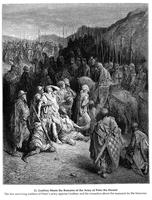
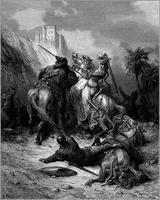
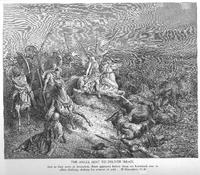
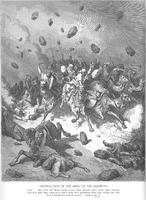
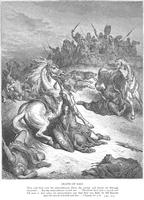
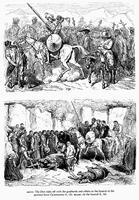
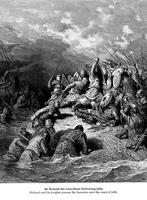
This analysis is grounded solely in the provided facts: the artwork is Glorious death of Jacques de Maille Marshal of the temple by Gustave Doré, created in the Romantic style as an illustration.
Expert Analysis:
As a work of Romanticism, Doré’s illustration elevates a historical moment into a profound emotional and heroic spectacle. The very title—"Glorious death"—encapsulates the Romantic obsession with martyrdom, sacrifice, and the sublime power of individual fate. Jacques de Maille, a Marshal of the Knights Templar, is depicted not as a defeated figure but as a transcendent martyr, his death transformed into a moment of spiritual and physical grandeur.
Doré’s mastery as an illustrator is key to the artwork’s significance. He harnesses the graphic medium to achieve dramatic chiaroscuro—a hallmark of Romantic painting—through dense cross-hatching and stark contrasts of light and shadow. This technique imbues the scene with a theatrical, almost operatic intensity, drawing the viewer’s eye to the dying marshal’s face and the surrounding chaos of battle. The composition likely emphasizes verticality and a sweeping, dynamic movement, typical of Doré’s narrative works, where the human figure is dwarfed by the immensity of the event.
Within the context of Romanticism, this illustration functions as a visual epic. It affirms the period’s fascination with medieval chivalry, the Crusades, and the nobility of a self-sacrificing warrior. Doré’s ability to pack such emotional weight and historical resonance into a black-and-white illustration—a genre often dismissed as secondary—demonstrates the power of Romantic art to find the sublime in any medium. The piece is significant not only for its technical brilliance but for how it crystallizes the Romantic ideal: a glorious, meaningful death that transcends the mere facts of history to become a timeless symbol of faith and valor.