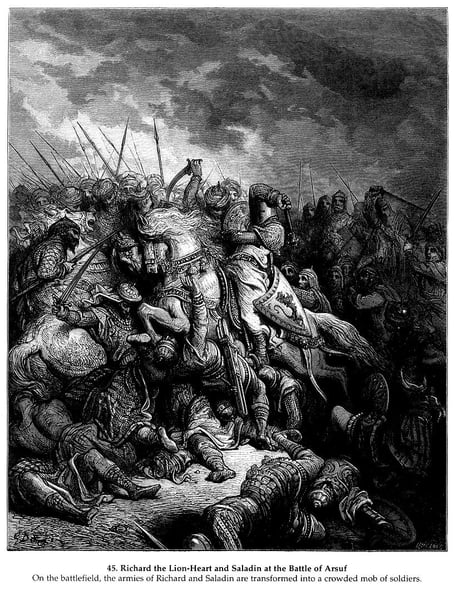
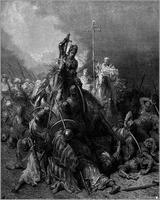
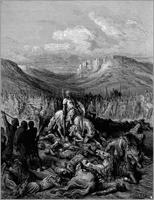
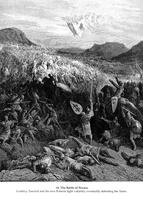
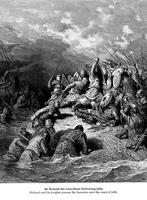
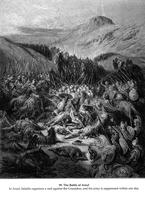
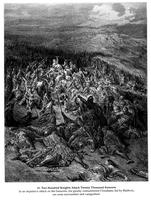
Gustave Doré’s Richard I the Lionheart in battle at Arsuf in 1191 exemplifies the Romantic fascination with heroic medieval history and dramatic narrative. As a book illustration, it leverages Doré’s masterful use of chiaroscuro and dynamic composition to heighten the emotional intensity of the Crusader charge. The work is significant within Romanticism for transforming a historical battle scene into a visceral, almost operatic moment—imbuing Richard I with idealized courage and individual agency, a key Romantic trait. The illustration genre allows Doré to fuse fine art with popular storytelling, making epic history accessible and emotionally resonant for a 19th-century audience. This piece stands as a quintessential example of how Romantic illustrators used stark contrasts, swirling motion, and expressive figures to celebrate national myth and chivalric valor, marking a departure from neoclassical restraint toward subjective, passionate experience.