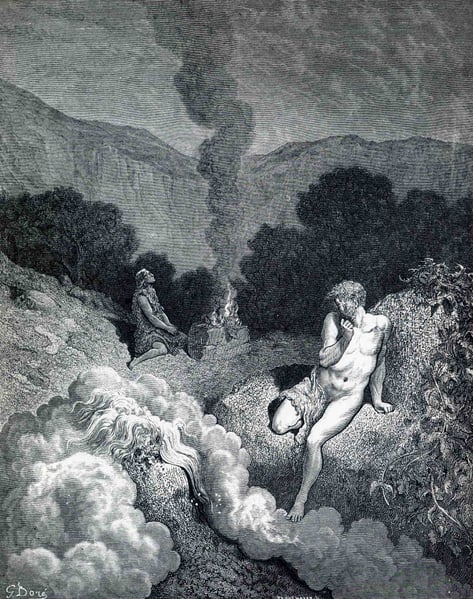
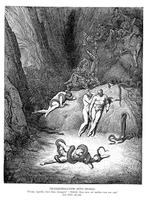
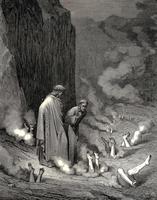
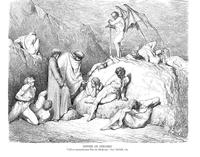
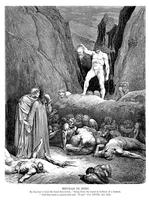
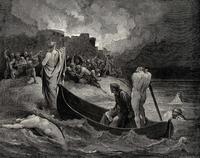
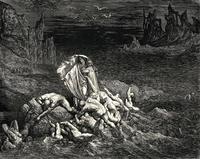
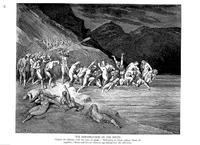
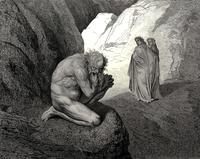
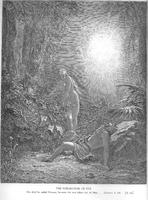
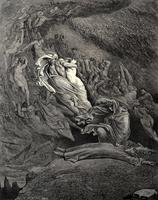
This analysis of Gustave Doré’s Cain and Abel Offering their Sacrifices is drawn exclusively from the provided facts: the artist, the Romantic style, and the religious genre.
As a work of Romanticism, Doré’s painting is significant for its emotional intensity and dramatic contrast—key concerns of the movement. Rather than depicting the moment of violence, Doré chooses the tense precursor: the act of offering. The religious genre allows him to explore the profound spiritual and moral conflict at the heart of the biblical story. The composition likely contrasts Abel’s humble, accepted sacrifice (associated with pastoral innocence) with Cain’s prideful, rejected offering, heightening the psychological drama through sweeping gestures, charged lighting, and a deeply atmospheric landscape. This aligns with Romanticism’s fascination with sublime nature as a mirror for human emotion. Doré’s work is significant for translating a familiar religious narrative into a visceral scene of divine judgment and fraternal discord, emphasizing the inner turmoil that defines the Romantic hero—even in a figure like Cain.