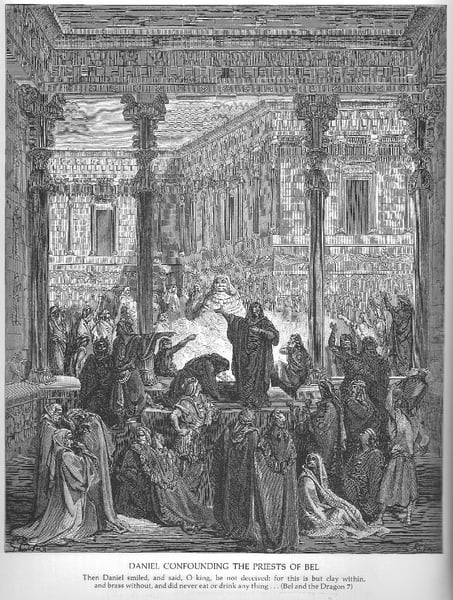
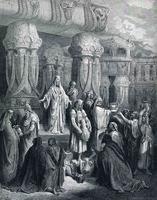
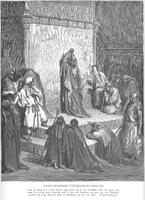
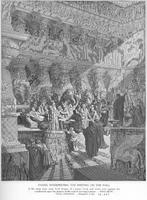
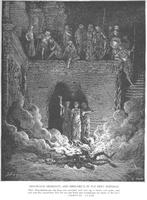
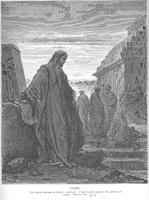
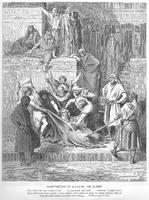
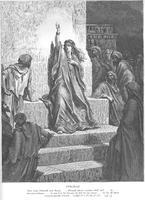
As a Romantic religious painting, Gustave Doré’s Daniel Confounds the Priests of Bel achieves significance through its dramatic fusion of biblical narrative with the emotional intensity and sublime grandeur that define the Romantic style. The work heightens the moral and spiritual conflict of the scene—Daniel exposing the deceit of the priests of Bel—by employing strong contrasts of light and shadow, a dynamic composition, and a theatrical sense of awe. Within Romanticism, such religious subjects were often used to explore faith, divine justice, and human frailty, and Doré’s rendering intensifies these themes, making the miraculous confrontation feel immediate and visceral. The painting’s significance lies in its ability to elevate a specific biblical episode into a universal statement about the triumph of truth, rendered with the vivid, emotionally charged visual language that characterizes the Romantic period.