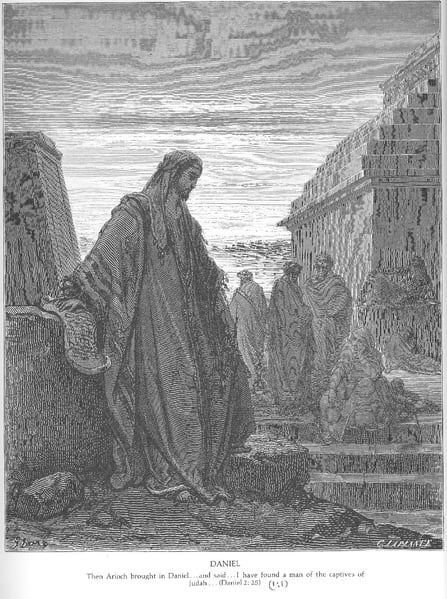
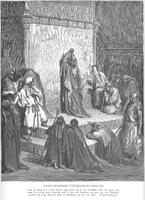
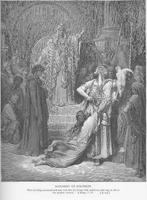
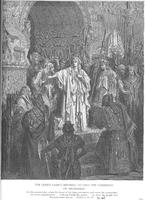
As a work of Romanticism in the religious painting genre, Gustave Doré’s Daniel among the Exiles draws its significance from the movement’s characteristic emphasis on intense emotion, individual spiritual struggle, and dramatic visual impact. The painting conveys the profound isolation and steadfast faith of Daniel as a captive in a foreign land, highlighting the Romantic fascination with the sublime—a sense of awe mixed with terror in the face of overwhelming circumstances. Doré likely employs stark chiaroscuro and a monumental composition to amplify the tension between the lone figure of Daniel and the oppressive power of his exile, making the work a powerful expression of inner fortitude and divine purpose. In this way, the artwork stands as a prime example of how Romanticism transformed biblical narratives into intensely personal, emotionally charged dramas.